Birds make delightful neighbours, but even common species like House Sparrows and Starlings are struggling—often due to a shortage of nesting sites. You can help by putting up a nest box. Whether you have a garden or just a wall, there’s likely a perfect spot for one.
Nest boxes give birds a safe place to raise their young—and offer you the joy of watching them up close. You might even see birds sheltering in your box during the colder months!
We’ve created our own DIY nest box kit. This guide will help you to build, install and maintain it so you can enjoy seeing the birds make it their home.
Different Nest Boxes for Different Birds
Bird species prefer different styles of boxes with different size entrance holes:
- Blue, Coal & Marsh Tits: 25mm entrance hole
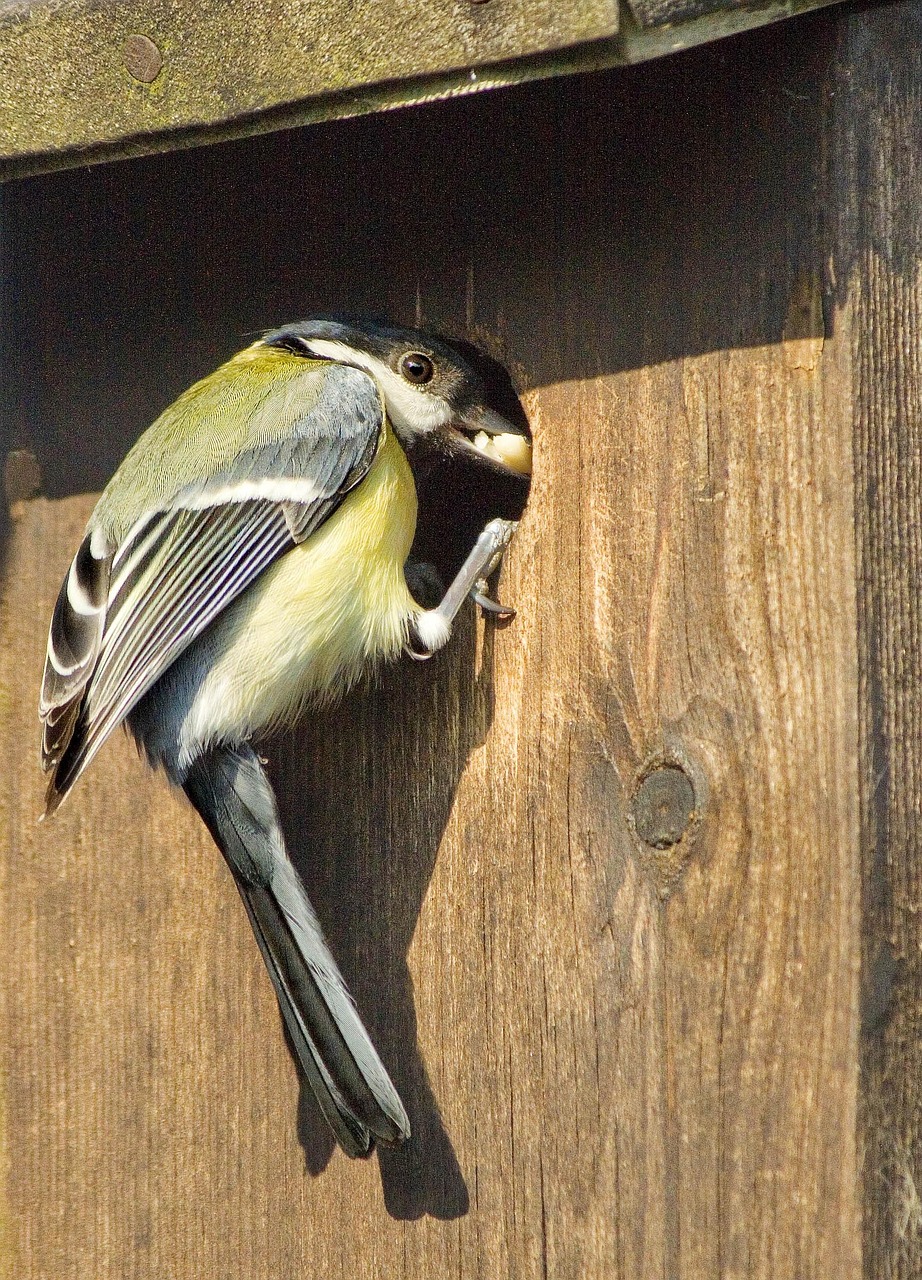
- Great Tits & Tree Sparrows: 28mm entrance hole
- House Sparrows: 32mm entrance hole
- Starlings: 45mm entrance hole and a larger box
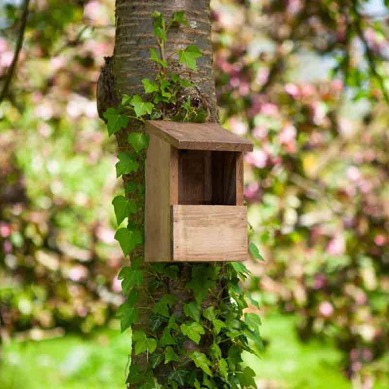
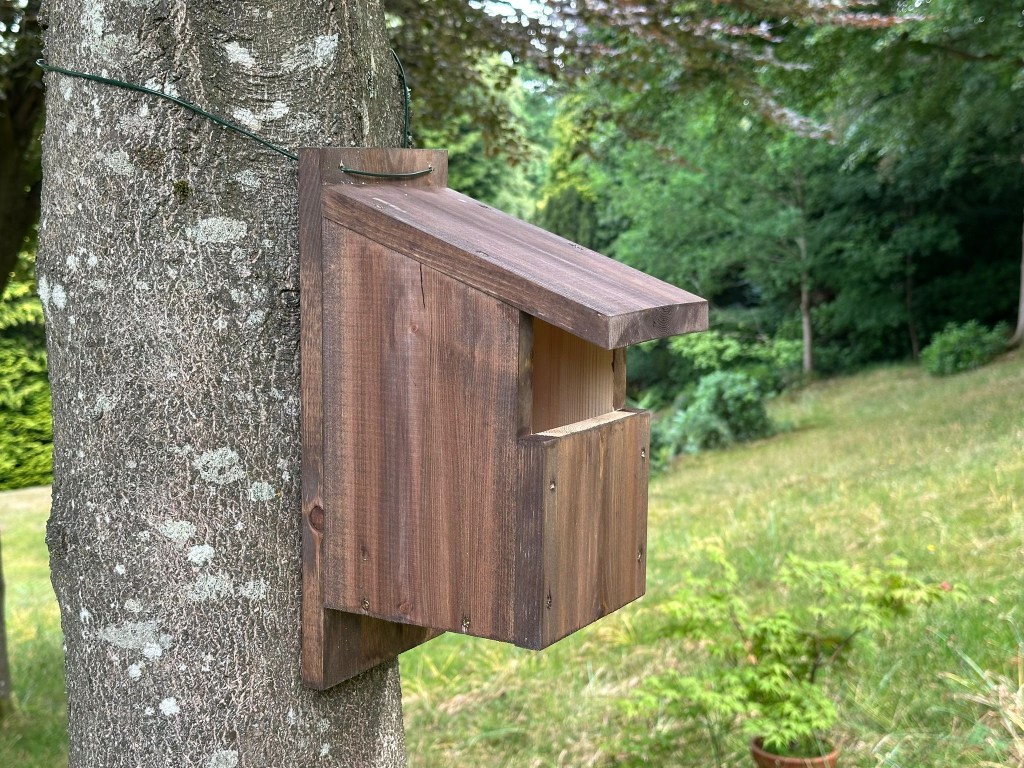
- Robins, Wrens & Pied Wagtails: Open-fronted box or one with top half of the front panel removed (see photo top left)
If your box has a 28mm hole (as with our kits), it suits Great Tits and Tree Sparrows.
No hole saw? You can use a jigsaw to cut a wedge or square-shaped entrance.
When to Put Up a Nest Box
You can install a nest box any time of year, but autumn is ideal. It gives birds time to discover and get used to it before spring. Birds may also use it for roosting in winter—up to 63 Wrens have been found huddled in one box!
Our fabulous Nest Box Kits – for purchase from FOLC at The Chart Fair!
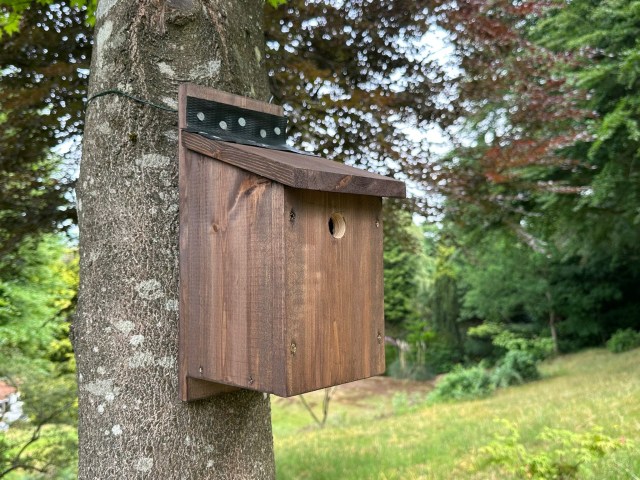
Thank you to everyone who purchased a Nest Box Kit at The Chart Fair. We hope you’re pleased with it. We found a bag of screws and tacks at the end of the Chart Fair, so if you discover your kit’s hardware is missing, please let us know and we will post it to you (or drop if you are in the Oxted area).
Hop on to our YouTube Channel to see how to assemble the nest box at home. It includes a brief run-through of instructions, which you can also print out here. A big thanks to Ray Edwards for making the kits.
Make your own nest box FROM SCRATCH!
What You’ll Need
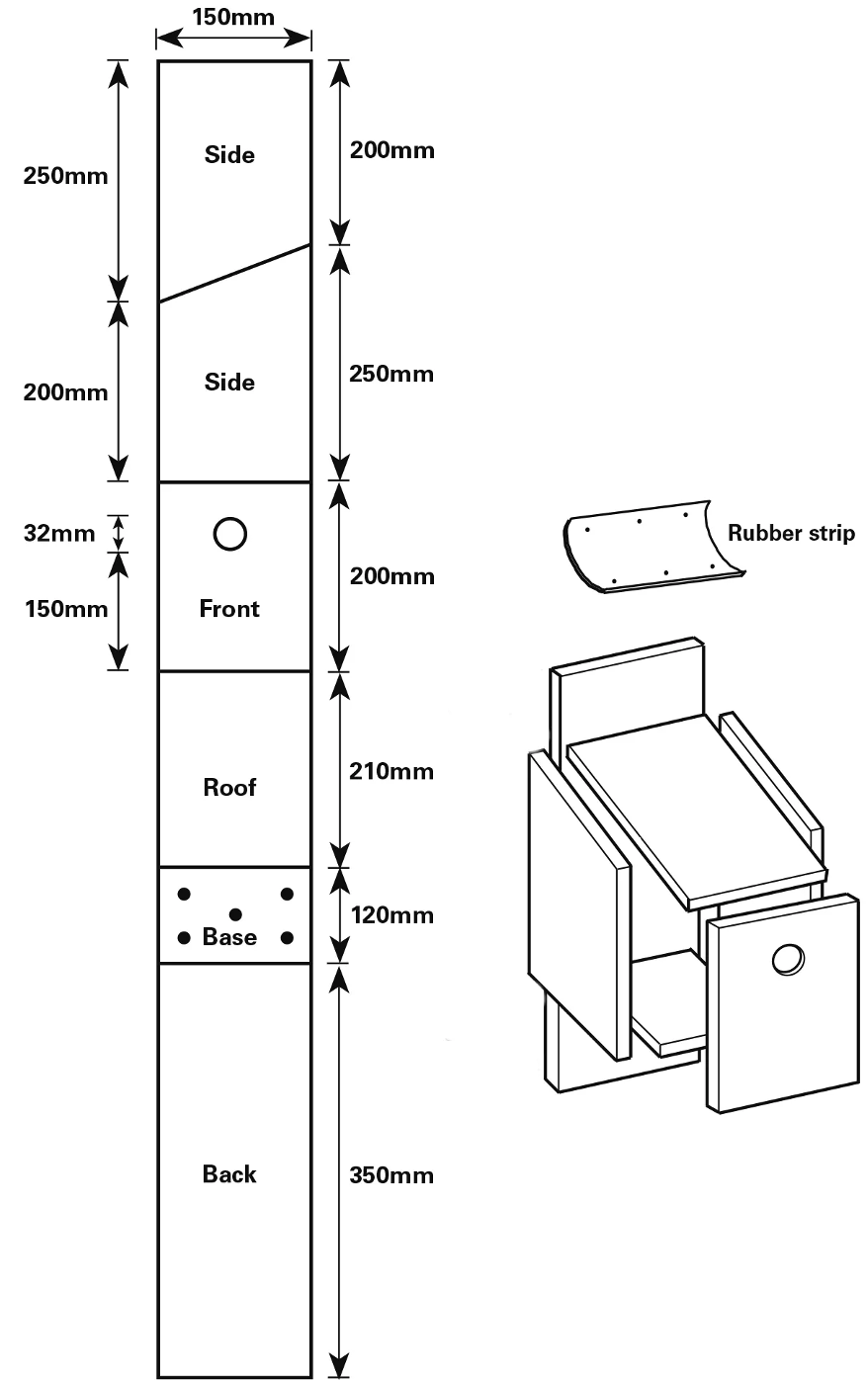
- 1 plank of FSC-certified wood, length 1,400mm x width 15omm, at least 15–18mm thick (not pressure treated, to avoid harm to birds)
- Pencil, tape measure, saw
- Galvanised nails or screws (Screws are best and last longer)
- Drill and 32mm (depending on target bird type) hole saw or jigsaw
- 10mm drill bit (for drainage holes in base)
- Waterproof hinge strip (rubber, roofing felt, inner tube)
- Screws & Rawlplugs (for walls) / Galvanised wire (for trees)
- Ladder
- (Optional) Water-based wood preservative (safe for birds)
Making the Box
- Cut your wood using the template provided.
- Base size depends on wood thickness:
e.g., for 18mm wood, base = 150mm x 114mm (150mm – 2 x 18mm)
- Base size depends on wood thickness:
e.g., for 18mm wood, base = 150mm x 114mm
- Base size depends on wood thickness:
- Assemble the box, screwing or nailing the sides, front, back, and base together. The sides, back and front ‘wrap around’ the base.
- Attach the roof by using screws or nails, you’ll be able to get into the box at a later stage to clean it out using. Use a waterproof strip to make a hinge between the top edge of the roof and the backing board. Try using a piece of bicycle tyre inner tube, damp-proof membrane or roofing felt. Don’t nail down the lid though, as you’ll need to be able to get into the nestbox for cleaning.
- To Note: If you’re using softwood for your nest box (e.g. pine), you could paint it with water-based wood preservative. If you decide to do this, it’s important to paint only the outside of the box and not paint around the entrance hole. Make sure to dry and air the box thoroughly before putting it up.
Where to Put your Nest Box
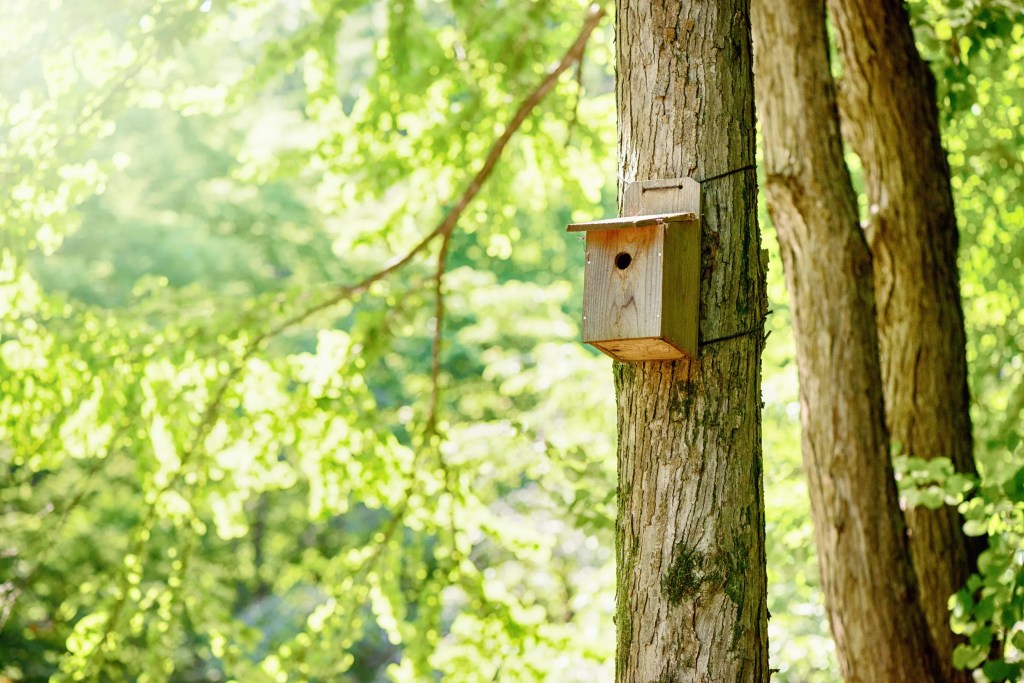
- Height: 2–5 metres off the ground
- Location: Trees, walls, under eaves—avoid busy paths and doorways
- Direction: Face the box between north and east, out of direct sunlight, to avoid overheating or rain
- Position: Slight forward tilt helps rain run off
- Flight path: Keep the area in front of the entrance clear
If attaching to a wall, drill guide holes and use screws with Rawlplugs. For trees, tie with galvanised wire, checking regularly to avoid damage as the tree grows.
Avoiding Problems
- No perch: Birds don’t need one and it can attract predators.
- Hole size matters: A 25mm hole helps keep larger birds out if needed.
- Avoid placing sparrow boxes near House Martin colonies – they don’t get on!
Attracting Birds
It can take time for birds to move in, so be patient. Increase your chances by making your outdoor space bird-friendly with food, water, and plants.
All birds are legally protected—watch from a distance and avoid disturbing them.
Cleaning & Maintenance
Clean your nest box every autumn:
- Make sure the box is empty and inactive (some birds nest into September)
- Remove old nesting material (wear gloves)
- Boil water to clean—no insecticides or flea sprays
- Let it dry completely before replacing the lid
You can place a small handful of clean hay or wood shavings inside for winter roosting or small mammals to hibernate.
Unhatched eggs may only be removed between September and January (August–January in Scotland).
Final Thoughts
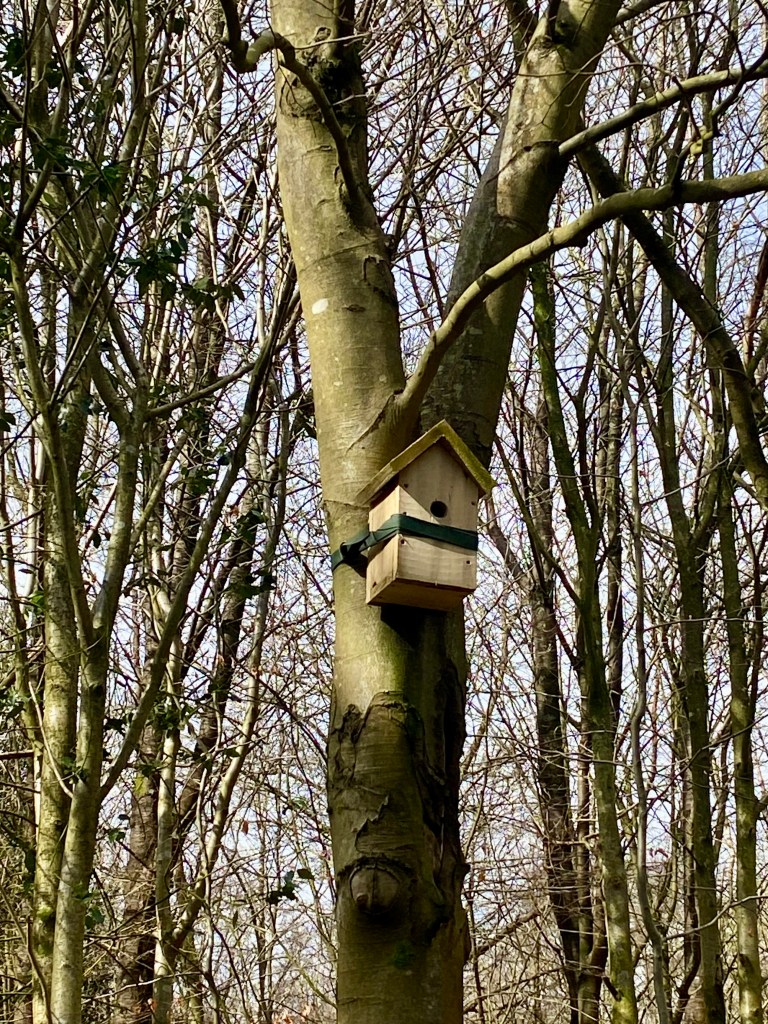
We hope you enjoy building your nest box—and seeing it used by birds year after year. When visiting Limpsfield Common, look out for our own nest boxes in the trees!
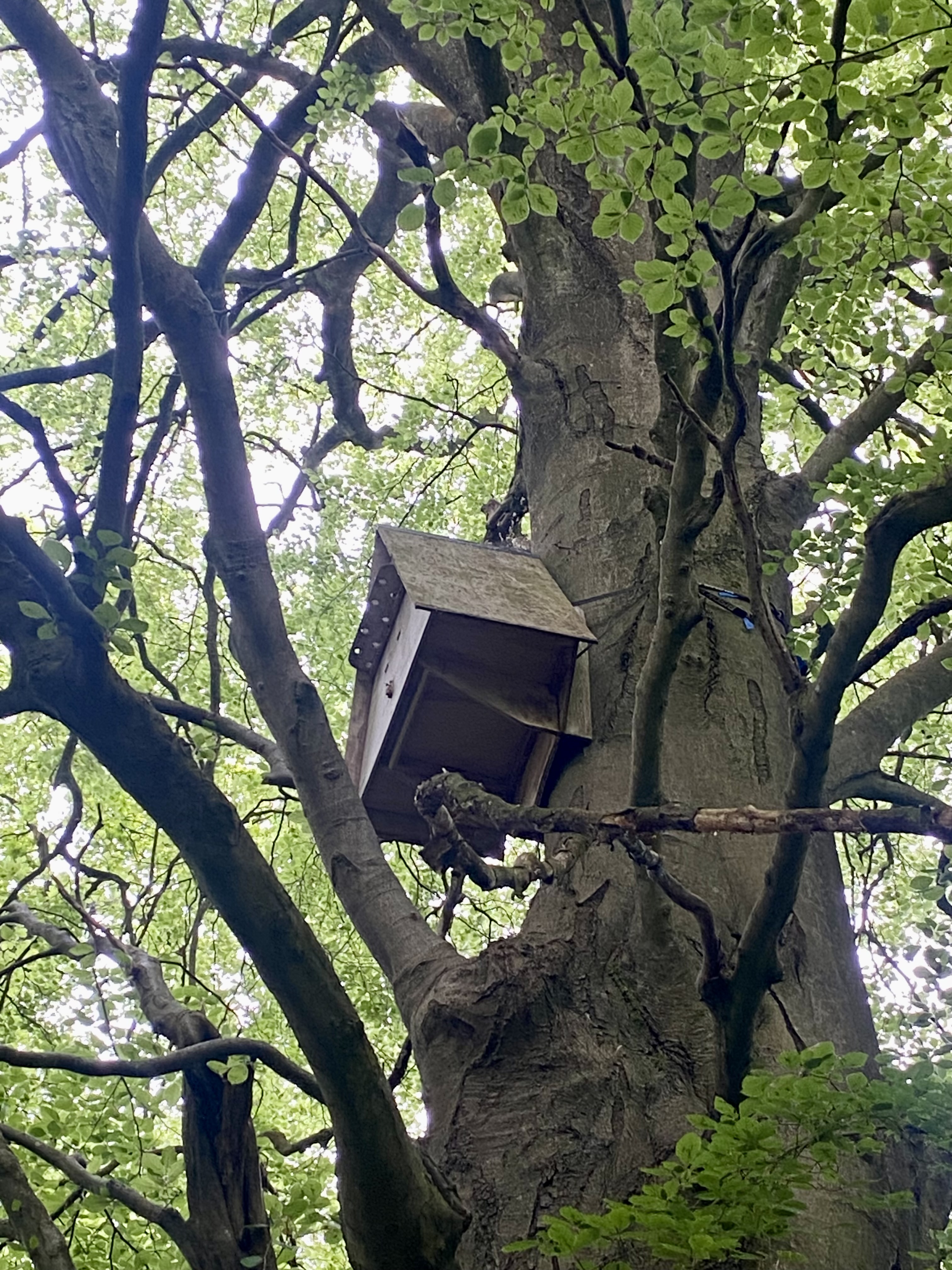
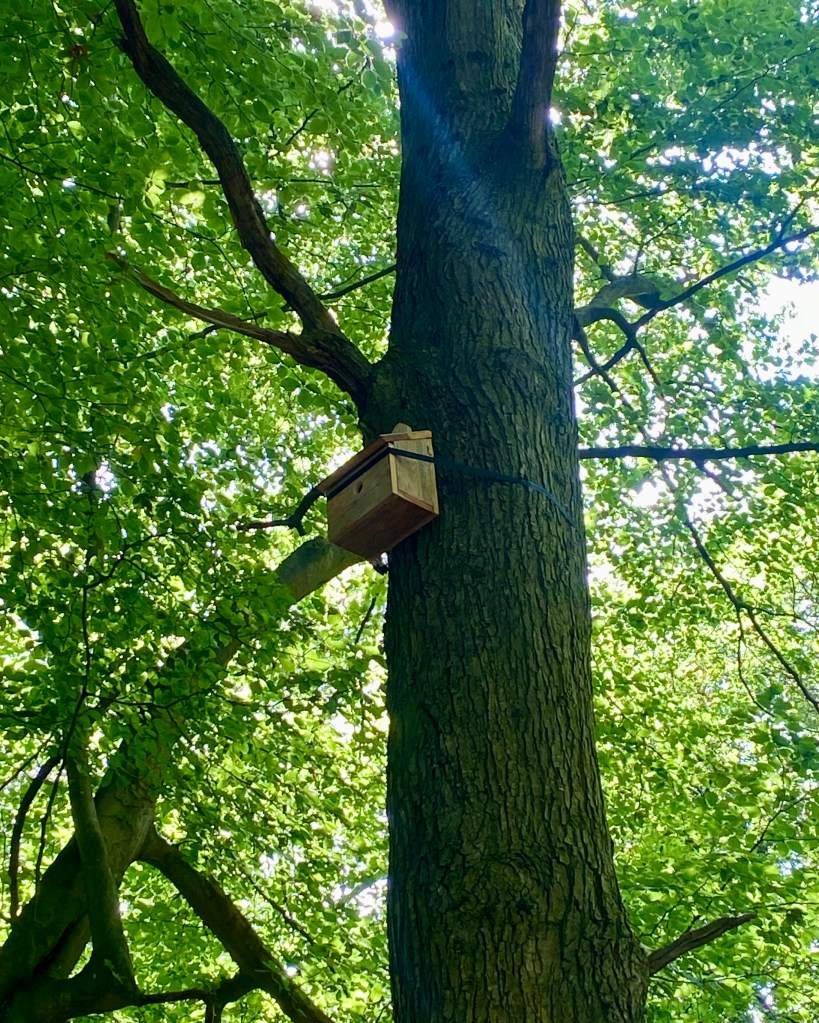
If you are walking in Ridlands Grove, see if you can find the owl box, high up in a beech tree. It looks something like this:
With thanks to the RSPB for their invaluable information and guidance.
More info on Nest Boxes on the RSPB site, here