In March 2019, a survey report was completed and published by Graeme Lyons, a highly respected freelance entomologist, ecologist and botanist and specialist in nature reserve and rewilding management advice.
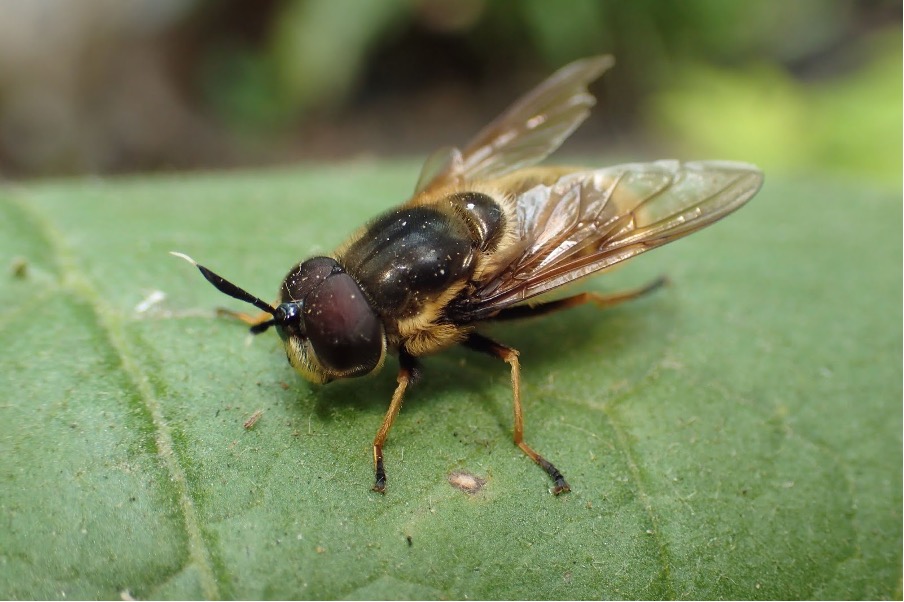
Fig. 1. Callicera aurata, recorded by chance at the very end of the bird survey at Scearn Bank.
0 – Summary
Limpsfield Common is a large cluster of commons of some 140 ha that lies to the east of Oxted in Surrey just south of the M25. Much of the site is designated as SNCI and is owned by the National Trust. Some of the site is tenanted by a golf course.
The author was approached by the National Trust late in the season in 2017 to carry out a survey and provide recommendations for management based on these findings and observations of the site in the field. Additional visits were made in 2018, along with a four visit Common Birds Census.
The site was visited on three occasions by the author in August & September 2017 and eleven occasions from April to August 2018. On each visit, time was stratified evenly between the commons. The approach was that of a ‘bio-blitz’, with a full species list being started afresh at each new common. Heathers, scarcer species and invasive species were recorded more accurately using a GPS. A public bioblitz in August 2018 at Pebble Hill was also provided and was well attended.
In 2018, a standardised reduced-visit Common Birds Census was carried across the whole common. This took two days to complete each of the four visits, additional recording or other taxa was carried out during these visits on an ad hoc basis but mainly the work was carried out after the bird surveys (which were typically finished by midday).
A total of 773 species were recorded, 446 of which were invertebrates. Of these invertebrates, 24 were known to have conservation status (5.4%) which is higher than the initial assessment of 3.7% from the 2017 interim report. Of these scarce species, many require short, dry grassland, deadwood, heather and/or flowers to survive. Eleven of these 24 species were recorded at Pebble Hill.
Highlights included the vulnerable Dodder found on Pebble Hill, the hoverfly Callicera aurata on the cleared area at Scearn Bank (along with Lemon Slug in the deep shade). Andrena proxima and Andrena labiata found at Ridlands Grove. The fungus weevil Platyrhinus resinosus was found at Happy Valley.
Ten heathland specialist invertebrates were recorded with seven each found on Pebble Hill and Ridlands. The tiny heather weevil Micrelus ericae and heathland specialist plant bug Orthotylus ericetorum, were the most widespread species occurring on all heathy areas except West Heath, which held no heathland specialists. A total of 23 deadwood beetles were recorded with Happy Valley having the most species with nine being present.
A total of 634 territories of 28 bird species were shown to be breeding on the site from the Common Birds Census. Overall, a total of 45 species recorded on the site. Of these 28 species, only five Birds of Conservation Concern were known to be breeding being: Stock Dove, Bullfinch, Dunnock, Song Thrush and Mistle Thrush. Two Firecrests (Schedule 1 but not a Bird of Conservation Concern) territories were found, one at Ridlands and one at Caxton. A single singing Willow Warbler was heard at Pebble Hill but this did not hold territory. The site with the most territories was Ridlands, with 121. Coincidentally, this is the same number of territories of the commonest bird across the whole of Limpsfield Common, being Robin. Robins accounted for 20% of all territories across the whole common. After this, Wren at 87, Blue Tit at 69, Wood Pigeon at 55 and Great Tit at 45 territories were recorded. These five species, account for 268 territories or 42% of all the territories at Limpsfield.
Clearly Pebble Hill (covering Hookwood, Pebble Hill and Grub Street Wood in 1997) and Ridlands (covering the areas known as Ballards, Brick Kiln, Chapel and Ridlands Grove) scored highest in Table 2 below across a wide range of quantifiable factors. Away from the golf course, Happy Valley was the next best with five species of invertebrate with conservation status. Interestingly however, no species of invertebrate with conservation status were recorded at Caxton, Lovelands, Chart Green and West Heath. These species are clustered in the areas that have had the most continuity of management and open space, i.e. maintenance of heathland and acid-grassland.
It is clear that the most biodiverse compartments are Pebble Hill and Ridlands. Approximately 2/3rds of these compartments are fairly intensively managed golf courses (labelled Ballards in the 1997 survey) but it is perhaps exactly for this reason the site is so biodiverse. Having been kept open for many decades, these compartments have a small amount of heathland and acid grassland that has been kept short, open and with plenty of light. In other words, they have ‘continuity of management’.
The least interesting compartments were Caxton, Lovelands and Chart Green. These were all smaller sites so naturally had fewer species but in the case of Caxton and to a lesser extent, Lovelands, struggled due to their closed canopy and shady nature, with limited niches available for more interesting species. Caxton was very cold and dark due to the dense canopy and very few invertebrates were recorded in this area but the presence of Lemon Slug in the dense shade and the scarce deadwood hoverfly Callicera aurata in the open areas, is very encouraging.
The data was analysed using nationally scarce invertebrates, heathland invertebrates, deadwood beetles, uncommon plant species, Ancient Woodland Indicator plants, non-native plant species and Birds of Conservation Concern. Pebble Hill & Ridlands fairly consistently scored high in many of these categories but interestingly Caxton, one of the smallest and darkest woods, had the most Ancient Woodland Indicator plants with 14 of the 33 species recorded, being present there.
The species list is probably fairly typical for a large Non-SSSI with so much human activity but the site clearly supports many more species than this. Encouraging recording by local groups would greatly add to the site’s knowledge base and the pan-species list provided with this report (to follow) will be an excellent baseline for managing this by site staff and or volunteers.
Basic principals in management are given specifically regarding deadwood, future veterans, burning in woods, prioritisation, inappropriate felling, heather management and ivy cutting.
It is clear that heathland restorations of West Heath and Little Heath failed due to lack of appropriate after-care. In both areas, heather is now facing local extinction. The common has declined for this reason. Of the species of conservation importance mentioned in the 1997 survey, only two were recorded in the 2017&18 survey, being Sphecodes crassus and Andrena labiata. Limpsfield Common was formerly an extensive area of nationally significant habitat type and it is disappointing that the condition and extent of heathland here has continued to decline from the 1997 survey; if evaluated according to Natural England’s condition assessment criteria, this site would be classed as ‘Unfavourable’.
As a general conclusion, key priority habitats (principally lowland heathland and lowland acid grassland) are in poor condition and declining. Despite this, these areas do still support important populations of rare and declining wildlife and changes to management will reverse these declines.
This report contains a number of management recommendations but the following two are of greatest urgency:
- Improve the condition of surviving areas of priority habitat: it is essential that the management of lowland heath and lowland dry acid grassland areas is prioritised so that there is no further deterioration of the condition of the surviving fragments. Measure of success will be improved condition over a short timeframe.
- Increase the area of priority habitat through a programme of heathland restoration. A priority is the expansion of surviving fragments and its restoration in areas of closed-canopy secondary woodland. A target for expansion should be agreed with resources available to support appropriate levels of aftercare.
More specific recommendations are given for each of the compartments surveyed.
1 – Introduction
- – Site overview
Limpsfield Common is a large cluster of commons of some 140 ha that lies to the east of Oxted in Surrey just south of the M25. Much of the site is an SNCI and is owned by the National Trust. Some of the site is tenanted by a golf course.
The author was approached by the National Trust site manager late in the season in 2017 to carry out a survey and provide recommendations for management based on these findings and observations of the site in the field. An interim report was produced in the winter of 2017/18. Additional visits were made in 2018, along with a standardised bird survey. This report contains details of all visits. Therefore, this report supersedes the previous report.
The last detailed biological survey was that carried out by Telfer et. al 21 years ago in 1997.
2 – Methodologies
2.1 – Recording by compartment for the wider survey
The site was visited on three occasions in 2017 by the author but on the first visit was accompanied by Eleanor Yoxall.
- 16/08/2017 (accompanied by Eleanor Yoxall and the trainee Alex King)
- 19/08/2017
- 02/09/2017
In 2018, the site was visited on eleven occasions by the author, these were:
- 13/04/2018 (bird survey visit 1, part 1 & wider surveying during and afterwards)
- 14/08/2018 (bird survey visit 1, part 2 & wider surveying during and afterwards)
- 06/05/2018 (bird survey visit 2, part 1 & wider surveying during and afterwards)
- 07/05/2018 (bird survey visit 2, part 2 & wider surveying during and afterwards)
- 26/05/2018 (bird survey visit 3, part 1 & wider surveying during and afterwards)
- 03/06/2018 (bird survey visit 3, part 2 & wider surveying during and afterwards)
- 16/06/2018 (bird survey visit 4, part 1 & wider surveying during and afterwards)
- 30/06/2018 (bird survey visit 4, part 2 & wider surveying during and afterwards)
- 05/07/2018 (wider survey visit only)
- 30/07/2018 (liaison visit with committee and staff)
- 30/08/2018 (liaison visit with volunteers and public bioblitz)
On each visit, time was stratified evenly between the commons with up to two hours spent recording on the larger commons. The approach was that of a ‘bio-blitz’, with a full species list being started at each new common.
Most species were recorded using the ‘site centroid’ for each compartment. This is a generic grid reference that sits at the centre of each compartment. If a more significant species was encountered then a GPS was used to generate an eight-figure grid reference for the species.
During the spring and summer of 2018, limited casual recording was made during the bird survey visits but most of the invertebrate recording happened after the survey had finished. As the protocol is to finish the bird survey by midday, it was still possible to fit in a long recording session after this point.
2.2 – Reduced-visit Common Bird Census (CBC)
The bird survey followed the standard methodology with only four visits being made. The author was on site at exactly one hour after sunrise on the given day and the survey finished by midday. The site was split into two halves in order to get around the whole site. This worked put at around 10 miles for one half and 8 for the other. Therefore, walking both on consecutive days with additional entomology afterwards proved to be extremely tiring and the surveys were split over several weekends by visits 3 & 4. It is predicted that the author walked around 70 miles to complete the bird survey alone. All in all, this work would have involved walking well over 100 miles to complete.
The site was portioned onto 11 A3 aerial photos, each grey-scaled to allow writing over the top. On each visit, every registration of every bird was written down using standardised BTO codes. See https://www.bto.org/sites/default/files/u16/downloads/forms_instructions/bto_bird_species_codes.pdf for a list of the BTO.
At the end of the survey, each of these maps was transcribed onto single species maps to allow the territorial behaviour of each species to accumulate over the four visits. This ‘territory analysis’ is ultimately how the ‘index’ of each species’ territories is derived. Although it cannot be called the absolute number of territories, it is a standardised way of assessing the breeding bird assemblage and could be compared to historic and future surveys.
There are over one hundred single species maps and this is too large a file to attach to this report. The maps will be digitised and sent separately and the originals given to the Limpsfield Common National Trust office.
In large blocks of woodland, particularly Happy Valley, it was essential to map one’s progress using Google Maps on a smart phone to pinpoint birds’ exact locations

Fig.2. Overview of the site showing the boundary of ownership (in red) and the 10 compartments used in this survey.
The eleven compartments used in the survey were as follows (listed in alphabetical order).
- Caxton
A small and very dark woodland dominated by Sycamore.

Fig. 3. The paths through the woods here are very dark and little light reaches the ground.
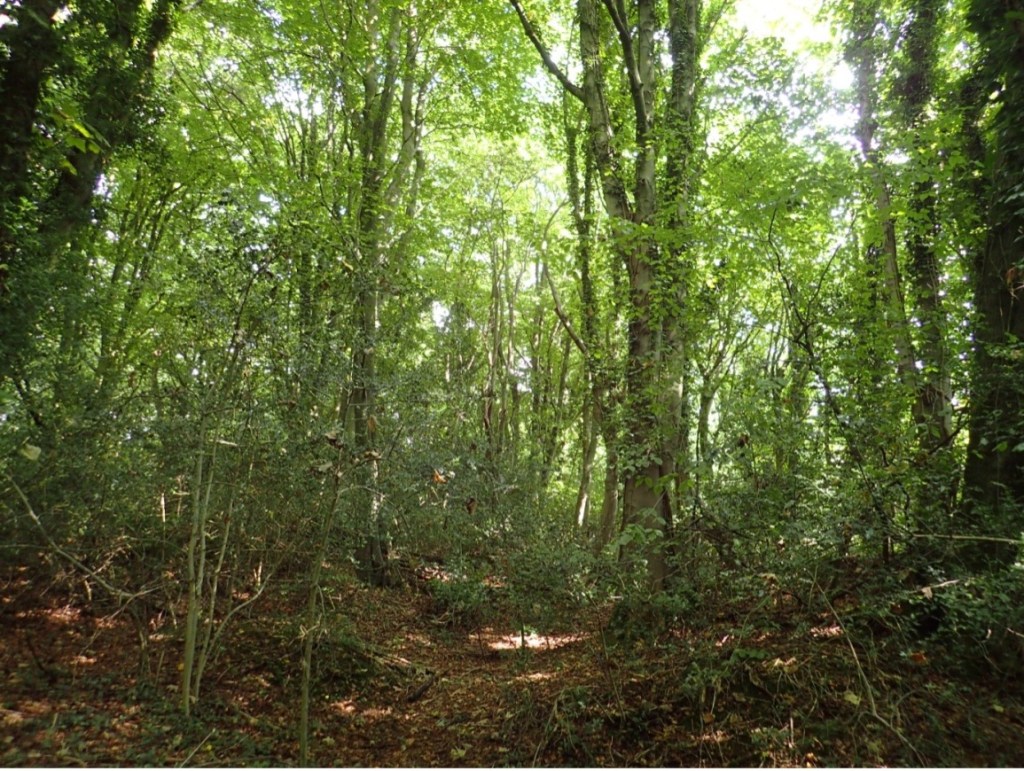
Fig. 4. A typical area of this block of woodland with dense canopy and under storey and little light reaching the ground.
A large compartment that is mostly dark and species poor woodland.

Fig. 5. A typical area of the Chart with a dense canopy and little light in the wood.
- Chart Green
A small compartment that should really be a part of a large compartment (such as the contiguous Chart) but it was so different to the surrounding woodland and being delineated by roads it was thought best to treat this separately. It was clear that some management was in place here but seemed more focused on Bracken control than the heathland.
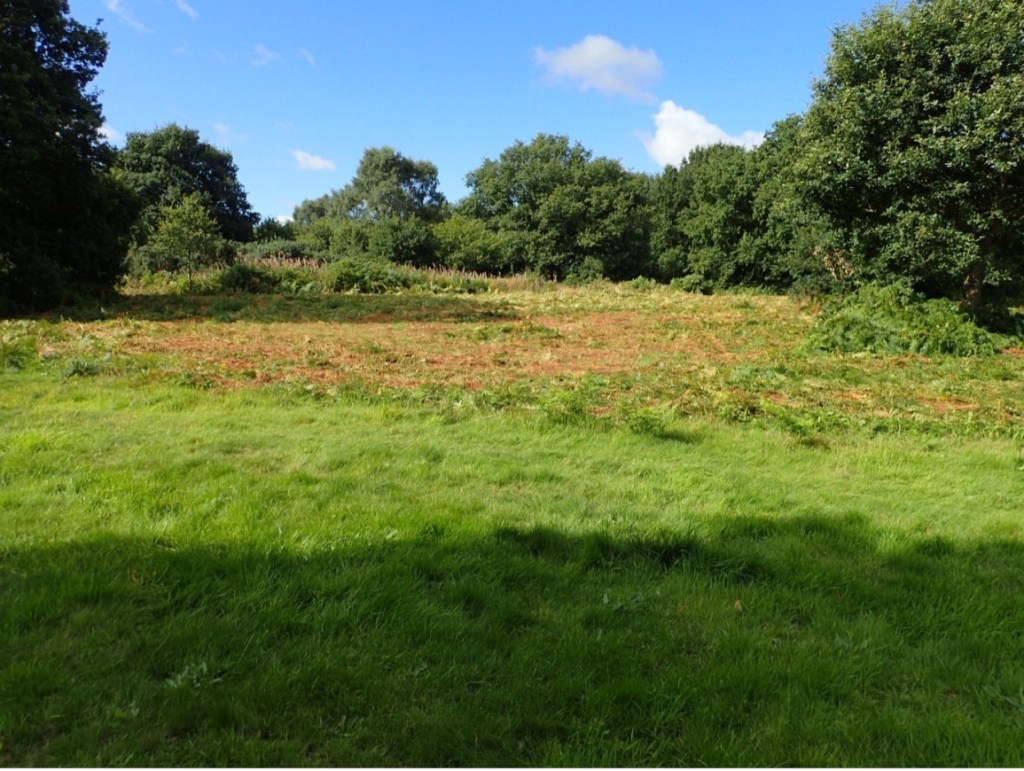
Fig. 6. Bracken management at Chart Green.
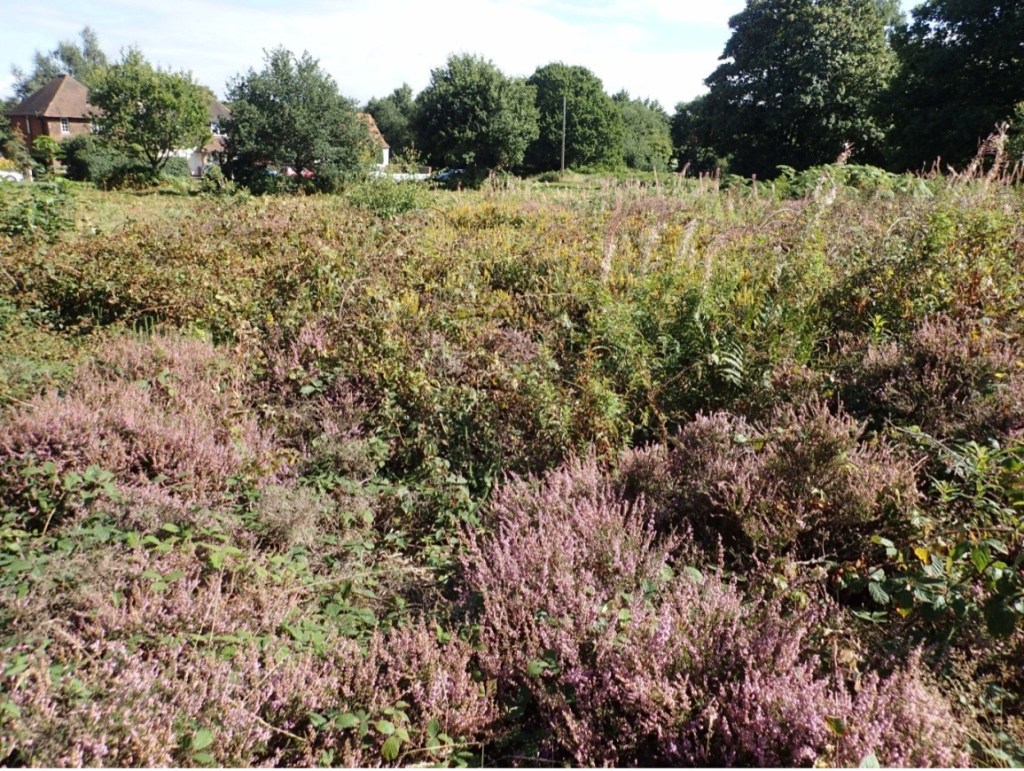
Fig. 7. A large block of Heather and Dwarf Gorse, the largest block on the whole site away from the golf course, is struggling due to an aging population and encroachment by bramble on all sides. Management targeted here must be a priority.

Fig. 8. Heather disappearing under bramble. This has to be the highest management priority across the whole common.
- Happy Valley
This compartment is mostly woodland. A very small area of heathland only a few square metres in extent is present but is under threat from encroaching bramble.
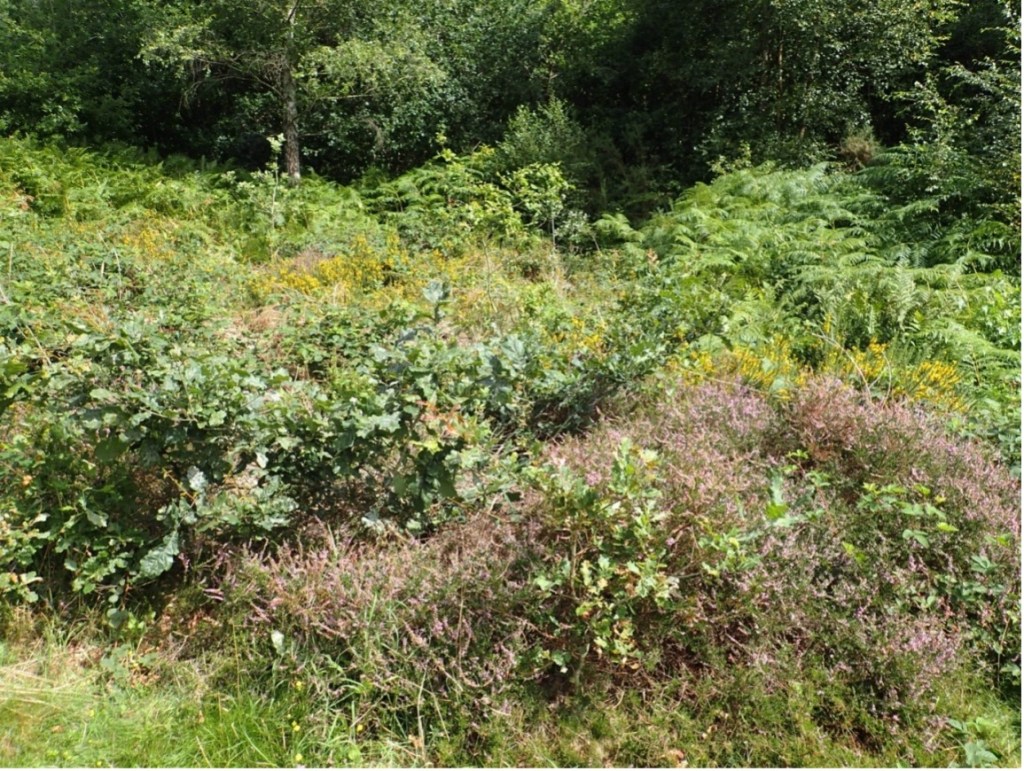
Fig. 9. The tiny area of Heather and Dwarf Gorse adjacent to the road at Happy Valley. Management of scrub here is a priority.
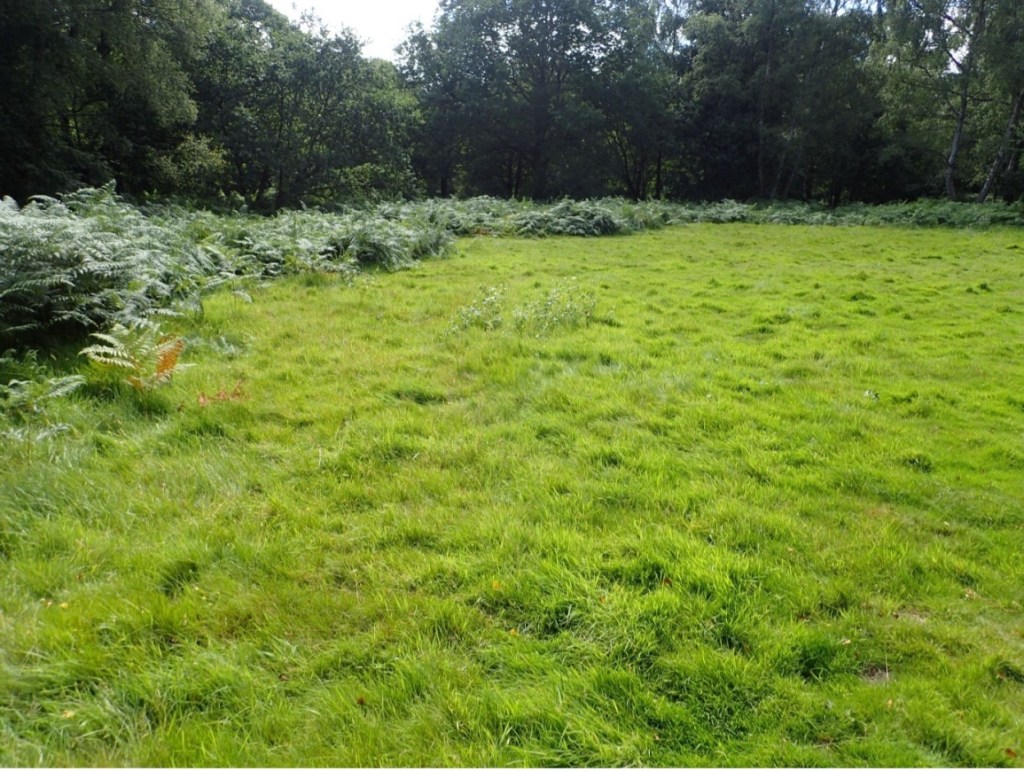
Fig.10. A clearing in Happy Valley kept open by rabbits and management.
- The Chart (this also includes the area known as Keepers)
A large block of mixed woodland with some extensive areas of conifers. To the north west of the site is a well-managed cricket field with some short acid-grassland.
- Little Heath
A small triangular block dominated by Bracken in the centre. Within this, a very small area is showing some Heather regeneration of very small seedlings. A number of trees were felled in 2016 to open up this area. The Bracken is rolled in the summer and the cut and collected in the Autumn. Previous management was an annual cut of the Bracken without collection of the arisings. It was when the arisings were starting to be removed that the Heather seedlings were noticed. Continuation of this removal is vital for the site but switching to cutting rather than rolling would be far better. This is discussed in greater detail below.

Fig.11. A nice area of Little Heath where a footpath has kept Bracken at bay and as a result has left the sward short enough for rabbits to graze. The result is a carpet of flowering Tormentil.

Fig.12. The large clearing at Little Heath appears to be mostly dominated by Bracken.
- Lovelands Heath
This small area of mostly closed canopy oak woodland with a network of narrow ride can be seen in figures. 62 to 64 below.
- Moorhouse Bank
A small compartment domianted by an acid grassland field itself bordered by woodland.
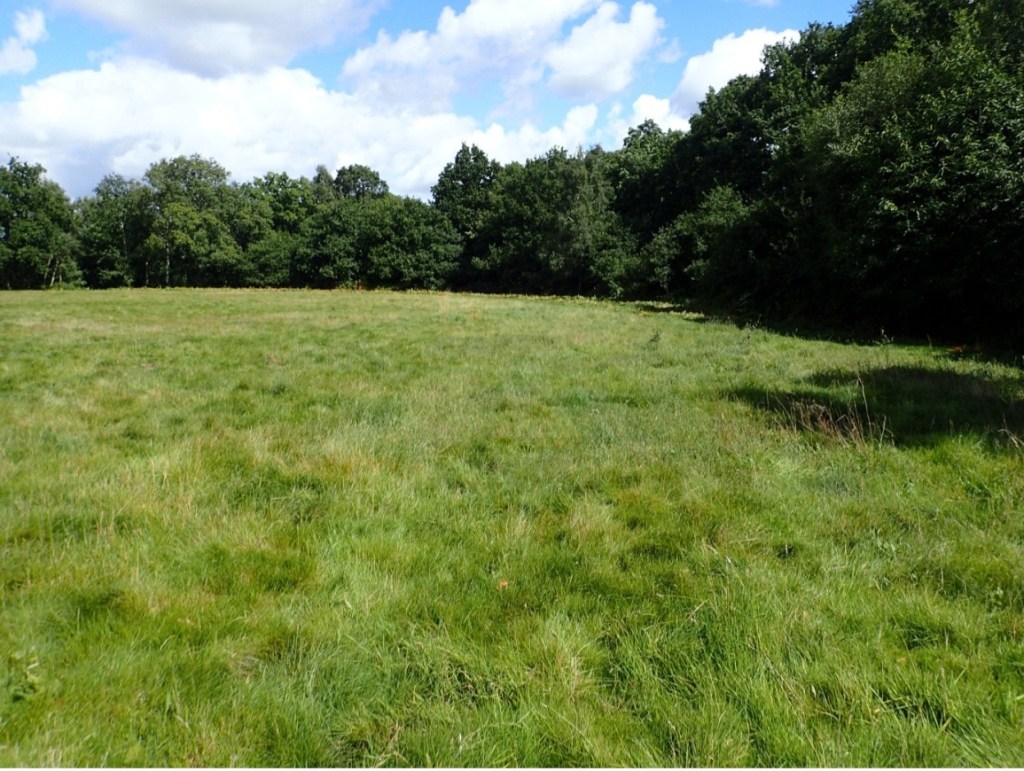
Fig. 13. The large managed area of acid grassland in the centre of Moorhouse bank was quite rich due to continuity of management supplemented by rabbit grazing.
To the north of this area near some house, a very botanically rich area was found with Knotted Clover, not recorded anywhere else on the site.
- Pebble Hill (this includes Hookwood and Grub Street Wood)
A varied compartment with a golf course section including a rich area of heathland and acid grassland and a steep woodland. A cricket field and topographically interesting air-raid shelters are also present in this compartment.

Fig. 14. The best areas of heathland was on Pebble Hill showing how important continuity of management is. Allowing a wider range of ages (and structural types) would greatly benefit wildlife here. As can be seen above, the vegetation is all one height.

Fig. 15. Keeping the old air-raid shelters free of scrub is a great practice. During the survey this area was alive with invertebrates such as Field Grasshopper and the robberfly Machimus atricaplllus

Fig.16. One of the few areas of untouched deadwood seen during the survey.
- Ridlands (this includes Ballards, Brick Kiln, Chapel and Ridlands Grove)
Much of this site is dominated by golf course, some of which is very nice heathland. Several large blocks of woodland are also present in the compartment. This area is bisected by a road and for this reason the compartment was further split into three sub-compartments in order to stratify recording time.

Fig. 17. A large area of woodland at Ridlands was almost devoid of any understorey or naturally decaying wood. This is perhaps partly due to footfall but also due to over tidiness.

Fig. 18. A rich area of acid grassland (here with flowering Harebell) kept open by the management of the golf course.

Fig. 19. A large area of Heather, Dwarf Gorse and acid grassland similar to that over the road at Pebble Hill. The even age is to be expected from golf course management but anything that can be done to diversify this would benefit wildlife.
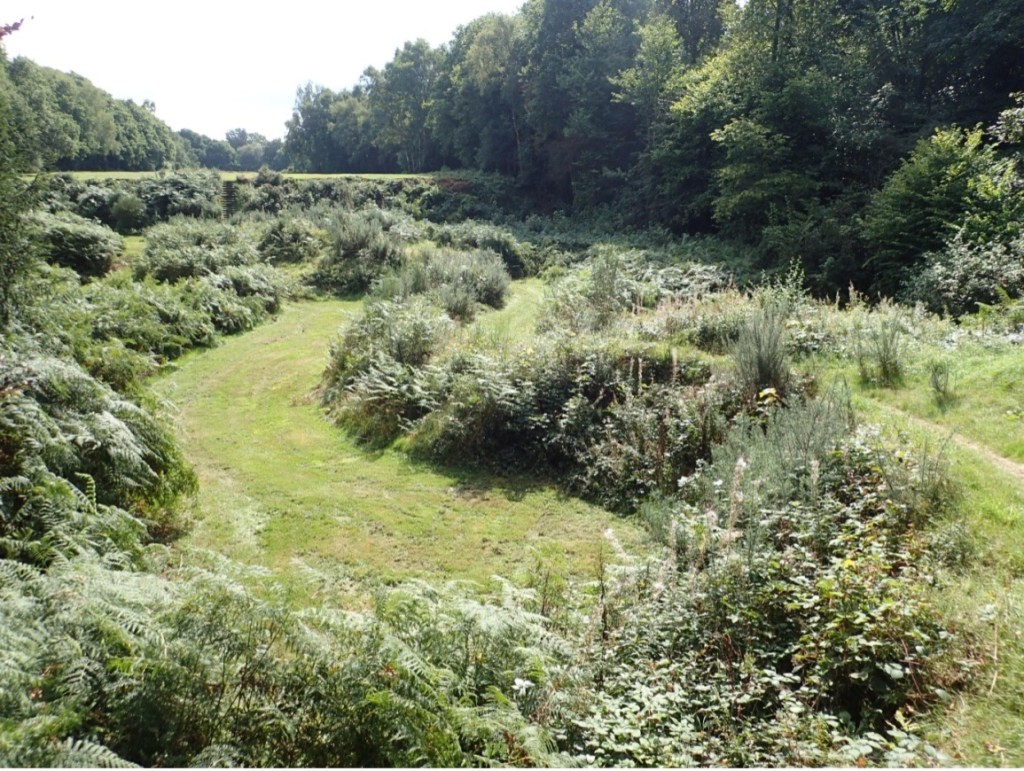
Fig. 20. This sunken area, although manicured, has a range of structural types good for wildlife. It was also the best area of Golden-rod during the survey and later flowering Pignut with the rare bee Andrena proxima.
- Scearn Bank
This was one of the poorest blocks of the survey. A very dense and unmanaged common with Rhododendron, Cherry-laurel and Sycamore dominating the woodland. A large open area to the east of the compartment was unfortunately not noticed by the author until the write up period and was only surveyed thoroughly in 2018.
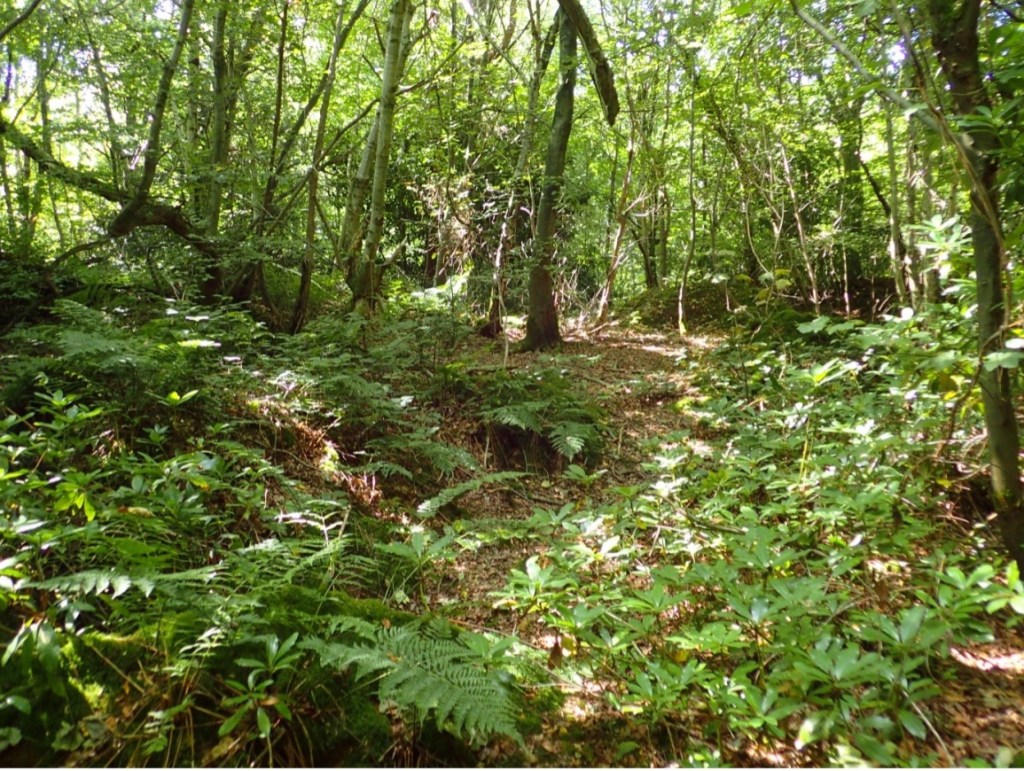
Fig. 21. A typical area of Scearn Bank with a carpet of Rhododendron and very little light penetrating the woodland. This was one of the poorest areas in the survey.
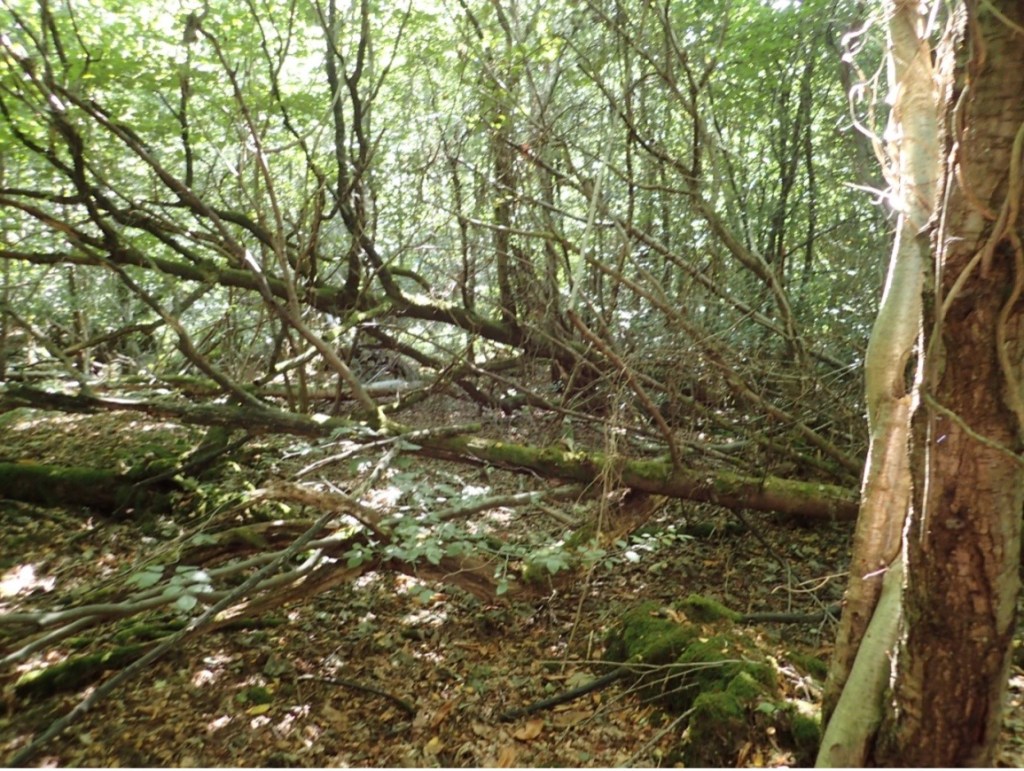
Fig. 22. Much of Scearn Bank is a tangle of collapsed trees which would make management extremely difficult to manage.
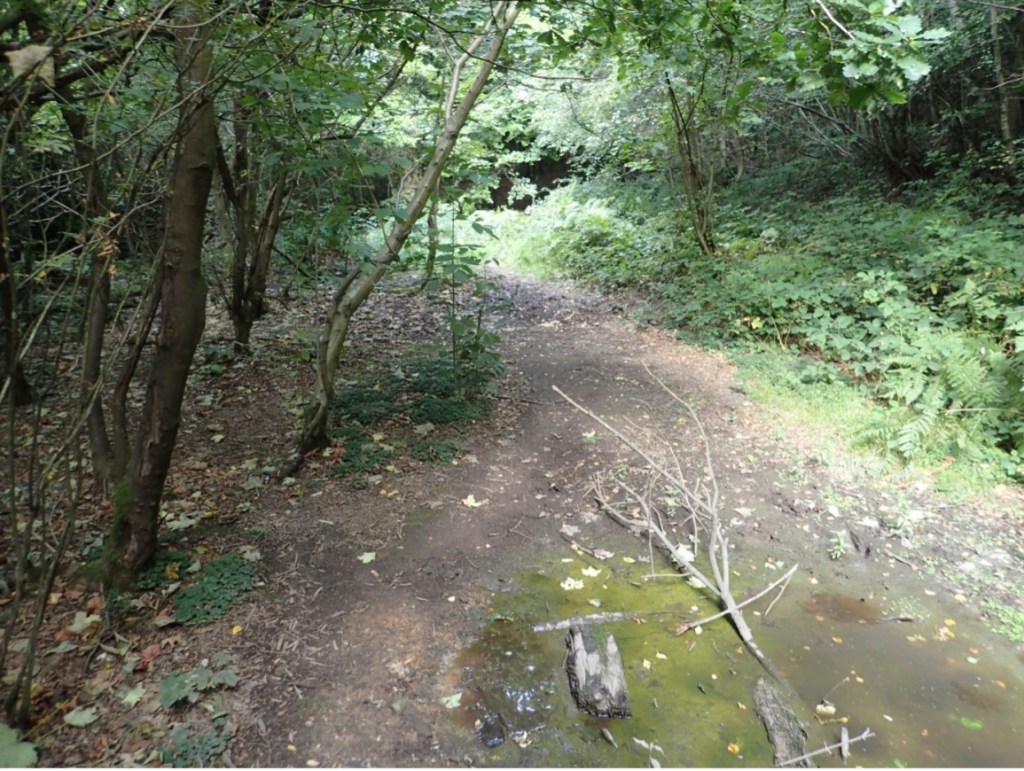
Fig.23. A muddy track through the woods was the only area of light noticed and was slightly richer than the surrounding dense woodland.
The large open area to the east of Scearn Bank (and the south eastern edge of the whole Common) was not recorded during the 2017 surveys. Therefore, the author spent additional time in this area during the 2018 surveys in order to better assess its wildlife. It was there that the scarce fly from the front cover, Callicera aurata, was recorded.
- West Heath
This compartment is mostly woodland with an open area in the centre dominated by Bracken. A tiny fragment of heath remains within this area.
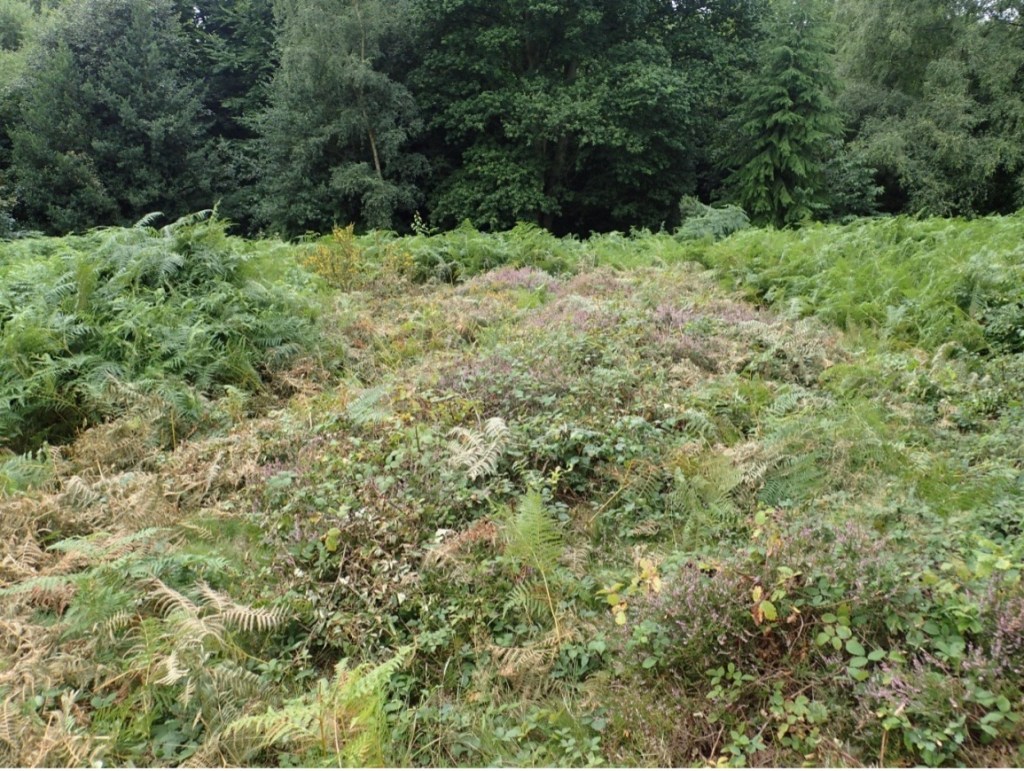
Fig.24. The tiny patch of over mature heather strangled by bramble.
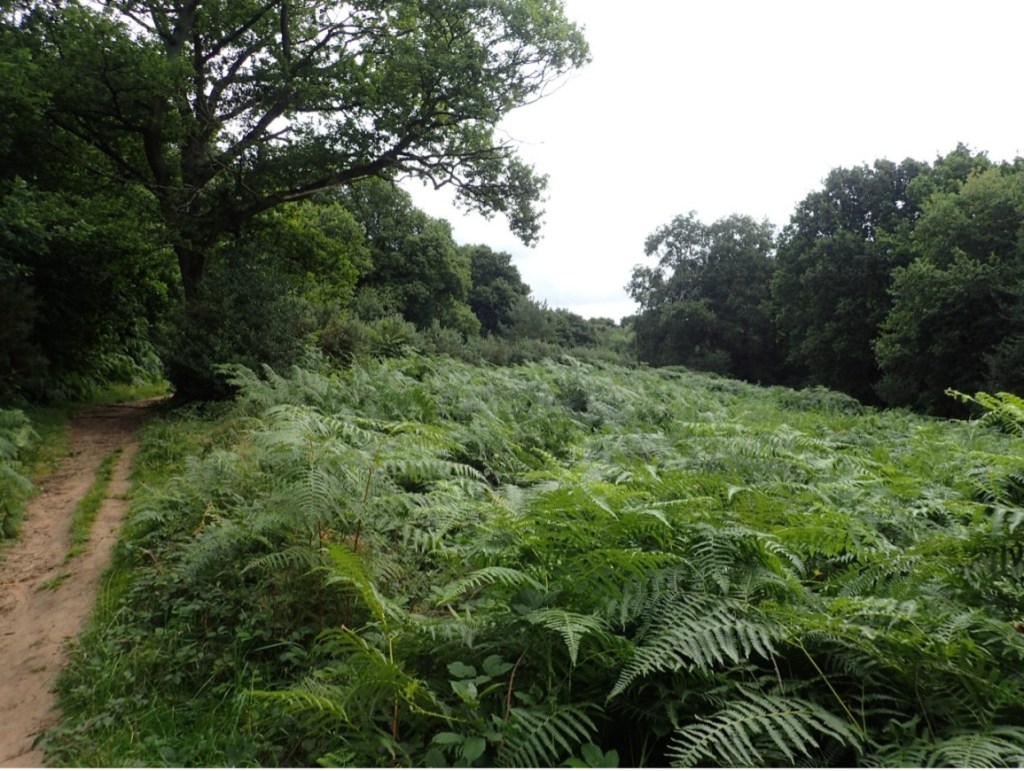
Fig. 25. The majority of the centre of West Heath is dominated by Bracken. Approximately 20 years ago some of this area was scraped but because appropriate follow up management was not in place, the scrapes were considered unsuccessful and have not been attempted since. Bracken is cut once a year but never cut and collected. This has created a thick litter layer. Trees have also been allowed to encroach into the centre but work has begun to address this.
2.3 – Heather mapping
Heather, Bell Heather and Golden-rod and any other interesting species were recorded using a hand-held GPS unit to eight-figure grid references and these were then plotted in QGIS so the data could be viewed spatially.
3 – Results
3.1 – Summary of findings
In 2017, A total of 441 species were recorded comprised of 1319 record. Over 100 records were made of Heather alone during the Heather mapping. A total of 218 species of invertebrate were recorded over the three days, almost half of everything recorded.
By 2018, this figure rose to 773 species with a further 957 records making a combined total of at least 2276 records made over the two survey seasons. A total of 446 invertebrates (more than double the total in 2017) were recorded over the two years, more than the combined total of all species in 2017.


Fig. 26. Breakdown of the species recorded. Fig. 27. Further breakdown showing invertebrate orders etc.
3.2 – Species with conservation status
A total of 24 invertebrates with conservation status were recorded during the survey and these are listed below. A proportion of 5.4% (compared to the same statistic from 2017 of 3.7%) is more encouraging. This is still fairly low for a nature reserve such as a SSSI but is perhaps more typical for a Local Wildlife Site, and an encouraging improvement on the 2017 result.
Conservation status is a complex issue. Each taxonomic group has used a slightly different set of criteria for assessing their species. Within each group, some species are assessed more often or more thoroughly than others. Some are long overdue and as a result there are two systems running at present. Mike Edwards has kindly allowed the author to use this text to explain both systems.
“GB Conservation Status categories are in the process of being upgraded. This means that it is currently necessary to provide values for both systems as not all groups have been dealt with.
The old RDB (Red Data Book) Conservation Status categories were based purely on the number of 10km squares which a species was known to have been recorded from, with a base-line date of 1970. These categories are obviously susceptible to the progressive accumulation of new records over time. This is especially so as, for some species in particular, non-specialist recording has increased significantly. There are also known changes in range and abundance which have been increasingly commented on by specialists.
The old system graded species like this:
RDB 1. Endangered. Species currently (post 1970) known to exist in five or fewer ten-kilometre squares.
RDB 2. Vulnerable. Species in severely declining or vulnerable habitats, or of low known populations. Known to exist (post 1970) in ten, or fewer, ten-kilometre squares.
RDB 3. Rare. Species with small populations, not at present Endangered or Vulnerable, but which are felt to be at risk. Species currently known to exist (post 1970) in fifteen, or fewer, ten-kilometre squares.
RDB K. Species of undoubted RDB rank, but with insufficient information for accurate placement; includes possible recent arrivals.
Nationally Scarce. Species currently (post 1970) known to exist in one hundred, or fewer, ten-kilometre squares.
In some groups these are further sub-divided into:-
Nationally Scarce a. Species currently (post 1970) known to exist in thirty, or fewer, ten-kilometre squares.
Nationally Scarce b. Species currently (post 1970) known to exist in thirty-one to one hundred ten-kilometre squares.
The new IUCN-type Red Data Book Conservation Status categories are based on perceived threat, of which distribution is only one part, the other being related to the population trend over the 10 years previous to the assessment, for the species in question. Such trends may be inferred from accumulated specialist knowledge, but, as the quantity and quality of data improves increasing effort is being made to model such changes. The output of such modelling being then compared with the specialist knowledge. Species with a negative trend may not be inherently rare, it is the decline which is the significant factor.
The new system grades species like this (This is very much a summary, there is considerable detail to this, please consult the group-appropriate published Great Britain Red List for a better understanding of how the gradings have been arrived at):
Regionally Extinct (RE). See group-appropriate Red List for criteria. In general, a sufficiently long time has elapsed since the last record of this species.
Critically Endangered (CE). Species with a very severe decline in population trend or geographic range within the area considered.
Endangered (E). Species with a severe decline in population trend or geographic range within the area considered.
Vulnerable (V). Species with a marked decline in trend or geographic range within the area considered.
Near Threatened (NT). Species which are suspected to qualify for Vulnerable, but where the data does no quite support such a category.
Least Concern (LC). Species which show no marked negative population trend or geographic range. Indeed, they may have positive values for either or both.
There will be a number of species where it has been considered that there is insufficient information to provide a supported grading, such species are called Data Deficient (DD). There are also categories for invasive (with anthropogenic agency) species, which are usually assessed as Not Applicable (NA).
The IUCN Red List system was primarily developed for assessing large mammal populations and fish stocks, adapting it for invertebrates is, inevitably, an experimental process and it is to be expected that there will be variability in its application and interpretation between groups. However, each published GB Red List has information on the actual way in which decisions have been arrived at. These should be consulted where necessary.
There is no inherent equivalence between the old and new systems
Great Britain has a considerable environmental gradient from north to south and, to a lesser extent, east to west. Species which are stable in their trend or geographic extent may still be considerably limited by the availability of suitable habitat resources. In order that such species do not get missed from conservation considerations a second, parallel, system of GB scarcity has been developed. This is similar to the old Conservation Status system in that it is based on the number of 10km squares which the species is known from, in a given time period, usually 30 years previous to the date of the assessment.
Categories for this National Scarcity rating are:
NR, with 1-15 10Km occupied squares
NS, with 16 to 100 10Km occupied squares.
Clearly both systems will require periodic revision if they are to remain relevant to the needs of a modern country and the conservation of its fauna.”
Coleoptera (beetles)
A total of 120 beetles were recorded during the survey. Of these, ten were recorded with conservation status (8.3%). This was the largest group of invertebrates recorded and also the highest proportion of species with conservation status across any group. These are as follows:
Uleiota planata – Nationally scarce a
Fig. 28. A single specimen of this incredibly flat beetle with very long antennae was found under the bark of a fallen tree. Unfortunately, like most of the fallen dead trees observed, some damaging chainsaw work had been undertaken, rather than allowing the timber to decay naturally.
Acalles ptinoides – Nationally scarce b
A single specimen of this small heather-specialist weevil was swept from heather on the golf course at Pebble Hill. This weevil is thought to feed inside heather twigs.
Fig. 29. The tiny weevil Acalles ptinoides swept from heather.
Diplocoelus fagi – Nationally scarce b
A small deadwood beetle that was recorded on fallen timber in Happy Valley in August 2017.
Attactagenus plumbeus – Nationally scarce b
This broad-nosed weevil that eats a range of plant roots on light soils was recorded in the open area of acid grassland at Happy Valley on 6th May 2018. The species can be abundant where it occurs.
Fig. 30. The broad-nosed weevil Attactagenus plumbeus.
Hippodamia variegata (Adonis’ Ladybird) – Nationally scarce b
A distinctive and now widespread ladybird that is now extremely common and would not be classed as scarce if the family was reviewed now. During this survey it was recorded only during the bioblitz on the 30th August 2018 on the heath at Pebble Hill.
Hyperaspis pseudopustulata – Nationally scarce b
Found on the heath at Pebble Hill on 30th July during the visit by the trustees. This tiny ladybird is now quite widespread.
Scymnus schmidti – Nationally scarce b
Another tiny ladybird recorded only from Pebble Hill during the bioblitz on the 30th August 2018 by suction sampler.
Lomechusa emarginata – nationally scarce
A single specimen of this incredibly unusual rove beetle was swept from nettles from a typically narrow ride in the Chart. This species is unusual in that it is a myrmecophile. It lives amongst Red Wood Ants Formica rufa. This is the only record of this species the author has at the time of writing. It was recorded on the 7th May.
Fig. 31. The incredibly fast and difficult to photograph ant-mimic Lomechusa emarginata showing the curved abdomen that helps it resemble a Red Wood Ant.
Neliocarus faber – Nationally scarce b
This small broad-nosed weevil was recorded twice during the survey, both times in fairly short acid-grassland. The first on the 14th April 2018 at Moorhouse Bank, the second at Pebble Hill on the 30th August during the bioblitz.
Platyrhinus resinosus (Cramp-ball Fungus Weevil) – Nationally scarce b
Fig. 32. The spectacular Platyrhinus resinosus.
Five of these spectacular weevils were found on a fallen tree just south of the small heathy-glade at Happy Valley on the 26th April. This beetle feeds on Cramp-balls or King Alfred’s Cakes fungus. It‘s quite scarce south of the North Downs but is commoner in the home counties.
Hymenoptera (bees, ants, wasps etc)
A total of 54 species were recorded across the common, six of which are known to have conservation status (11.1%). This is the highest proportion of species in any order with conservation status during the survey.
Andrena proxima – RDB3
A single female was recorded on Pignut on the golf course at Ridlands on 26th May 2018.
Andrena labiata – Nationally scarce a
Fig. 33. A s female Andrena labiata showing the distinctive red abdomen.
A single female was recorded at the eastern end of Ridlands Grove on the 6th May feeding on a solitary Dandelion flower.
Sphecodes crassus – Nationally scarce b
A cuckoo bee that perhaps no longer deserves the nationally scarce status. This was one of the few species already known from the site recorded in 1937 and 1938 (Telfer, et. al, 1997).
Red Wood Ant Formica rufa – IUCN Near Threatened
Recorded only from the Chart during this survey where the species was locally abundant.
Nomada lathburiana – Rare
Recorded only from Pebble Hill during the 7th May 2018. The host of this cuckoo-bee is the mining-bee Andrena cineraria, which during this survey was also only recorded at Pebble Hill.
Fig. 34. The cuckoo-bee Nomada lathburiana.
Lasius brunneus (Brown Tree Ant) – Nationally scarce a
This once much scarcer species is now widespread in the south east.
Araneae (Spiders)
A total of 54 arachnids (including seven harvestmen and 47 spiders) were recorded. Four of these are known to have conservation status (8.5%). The conservation statuses of spiders have been reviewed since the 2017 interim report.
Fig. 35. A female Sibianor aurocinctus.
This small but distinctive jumping spider was recorded by the volunteers sweeping the acid grassland at Pebble Hill during the bioblitz on the 30th August 2018.
Coelotes terrestris – Nationally scarce
Fig. 36. The large spider Coelotes terrestris.
This large spider is not infrequent in the south east and is often found under stones or logs in woodland, even quite shady woodland. Although in a recent review of conservation statuses of spiders the species remained nationally scarce, one would expect to find this spider in any bit of woodland, even secondary woodland, in the south east. It is therefore not particularly scarce in the region, despite its conservation status.
Trematocephalus cristatus – nationally scarce
Fig. 37. The money spider Trematocephalus cristatus showing the ‘hole’ through the cephalothorax.
The most widespread of the nationally scarce spiders found in this survey on five different compartments. Although the species is still considered scarce after the recent review, it is widespread in the south east and typically found on most sites with some element of scrub and/or woodland edge.
Hypsosinga sanguinea – Nationally scarce
Fig. 38. Hypsosinga pygmaea above and the nationally scarce heathland specialist Hypsosinga sanguinea below (with no yellow pigment in the stripes).
This small orb weaver was found only at Pebble Hill during the July and August visit in 2018. It is usually associated with heather. Unlike many of the other heathland specialists listed below, it is not however a ‘heather obligate’, i.e. it does need heather to survive but does very well using the structure it provides.
Mollusca (slugs & snails)
Fourteen species of mollusc were recorded, one with conservation status (7.1%).
Lemon Slug Malacolimax tenellus – Nationally scarce
Fig. 39. The single Lemon Slug was found in the tray and it is not clear how it got there but it could have been beaten off a tree.
This is a very exciting record. This species is known to be an indicator of ancient woodland, only occurring in the best ancient woodland sites. After liaising with Eleanor Yoxall, it is clear that Scearn Bank, albeit now probably the worst parcel of woodland on the site was once ancient Beech woodland, almost all of which blew down during the Great Strom in 1987.
Lepidoptera: Moths
A total of 54 species of moth were recorded but only one (the species recorded in 2017) was known to have conservation status (1.9%).
Povolnya leucapennella – Nationally scarce b
Fig. 40. one of the two specimens of the nationally scarce b Povolnya leucapennella.
Two specimens were recorded by beating low oak foliage in Lovelands Heath. Both the white and speckled colour form (shown in the image above) and the darker brown form were recorded. This is the first time the author has recorded this species, as it is very scarce in Sussex. Two animals present in a small area does suggest the species is well established on the site.
Diptera (flies)
A total of 29 species were record but only one species had conservation status (3.4%).
Callicera aurata – nationally scarce
A single individual was recorded at the end of the final bird survey in the open area at Scearn Bank on 30th June 2018. The author had no entomological equipment with him having just completed the bird survey before walking back to the car. He was ‘buzzed’ by a large golden-metallic fly. By standing motionless, the fly slowly descended and landed on the eye cups of his binoculars, providing one opportunity to grab the fly with his fingers which miraculously worked. The fly was carried back to the car, placed in a pot and identified back at home. This is the only time the author has encountered this species.
It requires deadwood as a larva and flowers as an adult.
Fig. 41. The striking Callicera aurata.
Lepidoptera: butterflies
Sixteen species were recorded with only the common and widespread Small Heath (Near Threatened and BAP) having conservation status. No White Admiral were recorded during the surveys.
Hemiptera (bugs)
Although the second most speciose group with 72 species recorded, only one of these (1.4%) had conservation status.
Lygus pratensis – Rare
Although listed as rare, most bugs are long overdue revision of their conservation status and this species is now almost ubiquitous in the late summer on any site. It certainly does not deserve to be listed as rare but is included here for completeness.
Orthopteroids (Crickets, grasshoppers & allies)
Twelve species were recorded but none with conservation status.
Odonata (dragonflies and damselflies)
Seven species were recorded and none with conservation status. This Is not surprising with limited water resources on the site.
Of the 24 scarce invertebrates recorded, their main resource requirements can be considered by looking at the following chart.
Fig. 42. Breakdown of the main resource requirements of the 24 species of invertebrate with conservation status.
This shows that short acid grassland has a great part to play in the invertebrate assemblage of Limpsfield Common along with deadwood and heathland, these should be a target for management at the site.
Better maintenance of the deadwood resource, the joint most frequent specialism with more than a fifth of all scarce species on site being dependent on it, is vital for the health of the site.
Eleven of the 24 species with conservation status were recorded at Pebble Hill. Although this does to some extent reflect the additional effort from the bioblitz, it is thought to still be the best area of habitat at Limpsfield. After this, Ridlands with a smaller but similar area of heather, showed six species with conservation status.
Away from the golf course, Happy Valley was the next best with five species. Interestingly however, no species of invertebrate with conservation status were recorded at Caxton, Lovelands, Chart Green or West Heath. These species are clustered in the areas that have had the most continuity of management and open space, i.e. heathland and acid-grassland.
Fig. 43. Map of the scarce invertebrates mapped using a GPS. This does not include all of the scarce species as some were just recorded to a site centroid including the Lemon Slug, as it was not clear exactly where in Scearn Bank it was recorded
3.3 – Heather specialist invertebrates
Fig.44. the diminutive Heather specialist plant bug Orthotylus ericetorum.
Fig.45. The Heather Mining-bee Andrena fuscipes was record from Ridlands and Chart Green and again at Pebble Hill in 2018.
Fig.46. During the survey the Beautiful Yellow Underwing moth that feeds on heather, was recorded only at Chart Green. It was not recorded anywhere else on the common in 2018 either, this being unusual as it is typically one of the commoner heathland specialists.
A total of 10 heathland specialist invertebrates were recorded on the visits.
Pebble Hill and Ridlands both had seven species each and this reflects the greater resource of heather available on these sites. Five species were present at Chart Green and amazingly a further three species were present on the tiny patch of heather at Happy Valley. None however were recorded at West Heath but this was mainly hampered by so much bramble growing in the heather that it was difficult to survey.
The tiny species Orthotylus ericetorum and Micrelus ericae were both recorded on all four sites.
Fig. 47. The tiny heather weevil, Micrelus ericae. This species is around 2 mm long.
3.4 – Other interesting species
The following species were unusual or attractive in some way and worthy of a photograph, they do however all lack conservation status so this section is for interest only.
Fig 48. Metalampra italica. A recent colonist that feeds on dead wood.
A single specimen of this little micro moth was found by beating gorse on Ridlands golf course.

Fig. 49. Several Antler Moths were recorded on Ridlands golf course.
Fig. 50. A very tatty ovipositing Purple Hairstreak found on the edge of Moorhouse Bank in 2017.
Fig. 51. The larva of a Purple Hairstreak found by beating the same lower branches as the tree in figure 50 above. Could this have come from one of the eggs layed by the exact same animal above?
Fig. 52. The striking Gorse Lacebug Dictyonota strichnocera, beaten from Gorse on West Heath.
Fig. 53. The Enchanter’s Nightshade Stilt Bug Metatropis rufescens. This bug was common during the survey being found in five of the eleven blocks surveyed.
Fig. 54. White Saddle. This was recorded on Little Heath and Caxton. Not a scarce species but an unusual looking fungi.
The site with the most species of fungi recorded was the Chart with Happy Valley having the least with none recorded. Only a very limited number of fungi were recorded during this survey and this list is merely provisional. The reason slightly more species were recorded at the Chart is most likely due to the varied nature of the woodland.
3.5 – Near Threatened (England) plant species
Some of the following nine plant species were recorded by GPS as they are uncommon and considered as ‘Near Threatened’ on the English Red List. Near Threatened is a conservation status given to species that may be threatened by extinction in the future. It sits between Least Concern and Vulnerable. All of the following species are considered ‘Least Concern’ on the Great Britain Red List but the England list has acted as a guide as to which species to focus on here.
Fig. 55. Golden-rod.
Fig.56. Non-ericaceous Near Threatened species recorded.
England Red List species
Golden-rod – Near Threatened. Found only on the golf course at Ridlands. An uncommon species that has many different species of invertebrate that feed upon it. It was restricted to the sunken area of unusual topography. Also an AWI.
Bell Heather Erica cinerea – Near Threatened. Only very small plants of Bell Heather were recorded at West Heath and Ridlands.
Heather Calluna vulgaris – Near Threatened. See the image below for a detailed map of the heather on site. Aerial photography was also used to aid mapping.
Harebell Campanula rotundifolia – Near Threatened. Occurring on the better areas of acid grassland, usually on the more insensitively managed ones as it is a poor competitor.
Wood-sorrel Oxalis acetosella – Near Threatened. This was mapped and occurred in two blocks of dark woodland, Caxton and Scearn Bank. Also an AWI.
Tormentil Potentilla erecta – Near Threatened. This plant is too small and widespread to map, it occurred in five of the eleven compartments.
Heath Speedwell Veronica officinalis – Near Threatened. This was not mapped as it was only recorded once in the acid grassland at Moorhouse Bank.
Sanicle Sanicula europea – Near Threatened. Found only once in the woods at Pebble Hill in spring. Also an AWI.
Common Valerian Valerienella carinata – Near Threatened. Found only once in the spring at Pebble Hill.
Great Britain Red List species
This species is on the actual GB red list and is therefore much more significant than the above species. It is however extremely difficult to infer anything meaningful from a single record on one site, hence the inclusion of the above ENG red list species in the following analysis.
Dodder Cuscuta epithymum – Vulnerable
Plants were found during the liaison visits on the short heather that was colonising the scrapes that had been put in on the golf course at Pebble Hill in July. This parasitic plant does not produce any of its own energy via chlorophyll, instead taking it all from its host. Hence the lack of any green pigment. There are several scare weevils that dependent on it, although they were searched for, they were not found.
Pebble Hill had the most plant species on the England and Great Britain RedLists with six in all (including Dodder). After this, Ridlands was the highest with five species. Lovelands was the only site that had no species from either list.
Fig. 57. Map of Heather and Bell Heather at Limpsfield Common.
3.6 – Ancient Woodland Indicator plants
From the ancient woodland inventory, it is thought that just Ridlands is recorded as Ancient Semi-natural Woodland.
A total of 33 Ancient Woodland Indicators were recorded, more than double the 16 recorded in 2017 alone.
The following paragraph is taken from the 2017 interim report:
Surprisingly the small dark wood Caxton scored the highest with six species, closely followed by five species each at Moorhouse Bank (also a small area of woodland) and Happy Valley. Lovelands Heath was the only compartment with no AWI records but this could have been due in part to the limited recording time in this block.
Interestingly, even after the second survey season, the small wood Caxton still comes out on top for Ancient Woodland Indicators with 14 species being recorded, followed by Scearn Bank with 10 species and after this, the Chart, Pebble Hill, Little Heath, Ridlands and Scearn Bank all have nine species each.
3.7 – Common Birds Census
3.7.1 – Species
Across the whole survey, a total of 45 species were recorded. During the CBC alone, 43 species were recorded. Therefore, for the species per compartment, the overall data was used, not just the CBC data.
Pebble Hill showed the most species with 33 recorded, closely followed by the Chart and Ridlands with 32 species each. The area with the least number of species was Chart Green with 18 species, which is to be expected being the smallest area. Lovelands was the second lowest with 19, another small site.
3.7.2 – Territories
Tab.1. Number of territories of each bird species at each site. ‘p’ denotes presence but not breeding behaviour. As some territories overlap the sites, the total number of territories is slightly less than the sum of territories across the sites, so for the overall total, the column ‘ACTUAL’ should be used which adjusts for this.
A total of 634 territories were derived from the data of some 28 breeding species. A further 15 non-breeding species were recorded during the survey.
Robin was the most frequent species with 121 territories, 20% of all territories at Limpsfield Common were Robins. After this, Wren at 87, Blue Tit at 69, Wood Pigeon at 55 and Great Tit at 45 territories were recorded. These five species, account for 268 territories or 42% of all the territories at Limpsfield.
Ridlands had the most territories overall with 121 across all species, followed by 109 at the Chart. This to be expected as these sites were the large sites. Chart Green had the least number of territories with 12 being the smallest site.
3.7.2.1 – Birds of Conservation Concern holding territory
This rules out scarce species flying over or using the site but not breeding (which are both included in the analysis in the following section). Of the 28 species holding territories, only five could be classed as Birds of Conservation Concern. Firecrest, although a Schedule 1 species, is green listed in the latest Birds of |Conservation Concern.
Ridlands was the only site to include all five of these species, being Stock Dove, Dunnock, Song Thrush, Bullfinch and Mistle Thrush. After this, Pebble Hill held four species and Scearn Bank and the Chart three species each. Chart Green and Lovelands were the only sites to have no breeding Birds of Conservation Concern.
3.7.3 – Birds of Conservation Concern (species-richness only)
Sixteen Birds of Conservation Concern (taken from BoCC 4) were recorded and all are used in this part of the analysis, even if just thought to be a fly-over (a different analysis of Birds of Conservation Concern thought to be breeding is carried out above).
The Chart scored the highest with 10 species followed by Pebble Hill with nine and Ridlands with eight. The high score of Chart is to some extent biased by a larger number of non-breeding Birds of Conservation Concern being recorded there. The more important result is the number of breeding Birds of Conservation Concern mentioned above. Happy Valley, West Heath and Chart Green all had only three Birds of Conservation Concern recorded there. This is easily explained in Chart Green being a small site. Happy Valley is one of the biggest continuous blocks of woodland on the site and shows that open space and structure is desperately needed for more interesting bird species to thrive here. The same can also be said for West Heath, where the open space is dominated by Bracken, limiting the benefits of any open space for birds.
One bird that was conspicuous by its complete absence was Marsh Tit. Not a single registration was made anywhere during the survey. This may to some extent indicate that much of the site has been lost from more open habitats in recent history.
A single registration of a singing Willow Warbler in spring at Pebble Hill rapidly passed through the site. Another adjacent to Moorhouse Bank was also not recorded again but neither was it present on the site.
Two Firecrest territories are interesting but this bird is rapidly becoming commoner in the south east and is green-listed. In 2018, Firecrest numbers collapsed though, so the actual number on the site is likely to be higher in a typical year. The species is still protected as it is on the Schedule 1 list.
Beyond this, the assemblage of birds at Limpsfield Common could be described as being dominated by common woodland birds and as it is now is not a remarkable feature of the site. This survey could be repeated at periods of five or ten years to help chart the progress of habitat management across the site.
3.8 – Invasive plant species
A total of 17 non-native plant species were recorded in 2017 and this doubled to at least 34 species by the end of 2018.
Ridlands had the biggest problem with 15 species recorded but Little Heath had 13 species. This smaller site suffers from being surrounded by houses on two thirds of its perimeter and a road on the other third. The southern corner is particularly bad for invasive species
Some are relatively benign or occur at very low densities. Some, such as Cherry-laurel and Rhododendron occur at such high densities across the site it would be extremely challenging to eradicate them from the site. That said, to prevent any further spread, further encroachment of these species should be addressed with immediate effect to prevent the loss of any more natural habitat. This would also prevent the situation getting any worse if resources allow for a more comprehensive eradication of these species on the site in the future if resources allowed.
Therefore, the plants discussed here are those that occur at more intermediate densities that could either be eradicated fairly easily because they occur at low densities on the site or that may become a major problem in the future if nothing is done about them.
Fig. 58. Small Balsam is present in most of the woods.
This diminutive relative of Himalayan Balsam is much more of a woodland species. The author has only encountered this species once in Sussex. It is clearly much more widespread in Surrey being present in six of the eleven blocks surveyed.
It is already very well spread but an attempt to map it was made, however, this is not exhaustive and should really only be used as a guide. The problem on the site is quite bad and it may be that it’s too great an issue to deal with without throwing a huge amount of resources at it.
The following is taken directly from https://www.cabi.org/isc/datasheet/28768
“Experiences with the control of I. parviflora have not been published. There is no indication that this annual would withstand cutting or mowing. As most of the seeds germinate in the first spring, cutting and pulling of the plants in their flowering phase before seed-set may be an effective control measure (Coombe, 1956). However, it may be assumed that control methods successful with the related I. glandulifera may prove useful with I. Parviflora.”
A single specimen of Japanese Knotweed Fallopia japonica was observed at Scearn Bank and is marked on the map below. This should be dealt with quickly as it’s not at this stage a great threat.
Variegated Yellow Archangel was found in spring 2018. This is problematic as the native Yellow Archangel is also present and could be threatened by this invasive species. Pulling out by the roots the large extensive patches with volunteer help would be a good use of time. A large patch was found near to a car park at Happy Valley in August. It was also present at Lovelands and Little Heath (see figure 59 below).
3.9 – Saproxylic (deadwood) beetles
A total of 23 saproxylic beetles were recorded. Unfortunately, a minimum of 40 species is required to calculate the Saproxylic Quality Index.
Happy Valley had the most species with nine being recorded, followed by Ridlands with seven species. Several sites had no deadwood beetles being Caxton and Chart Green.
Fig. 59. Map of the invasive species of concern on the site.
3.10 – Comparative analysis of the commons
Tab. 2. Green shows the highest scoring compartment and red the lowest scoring compartment.
The abbreviations for the compartments are as follows: HV = Happy valley, ELH = Caxton (East of Little Heath), HC = The Chart (including High Chart), LH = Little Heath, LL = Lovelands Heath, MHB = Moorhouse Bank, PH = Pebble Hill, RG = Ridlands, SB = Scearn Bank, St. A = Chart Green, WH = West Heath.
Clearly Pebble Hill closely followed by Ridlands scored highest in Table 2 above. Lovelands, Caxton and Chart Green scored consistently low overall, with the remaining sites sitting somewhere in between.
Pebble Hill was the only site to score a higher percentage of invertebrates (6.3%) with conservation status than the overall site average (5.4%). It was clearly the best site for invertebrates including heathland specialists. It also had the most interesting flora. Happy Valley had the most deadwood beetles. The Chart had the most Birds of Conservation Concern and fungi and Caxton had the largest number of Ancient Woodland Indicator plants.
4 – Conclusions
For 14 days surveying over a 12-month period, a species list of 773 species of which 446 were invertebrates, is thought to be a good list for the site. Although the site will clearly hold many more species than this, continuing to add to this list now would provide diminishing returns. At this stage it may be better to encourage local naturalists to continue to add to the site’s species list and its understanding.
Of the eleven compartments surveyed, it is clear that the most biodiverse compartments are Pebble Hill and Ridlands. Approximately 2/3rds of these compartments are fairly intensively managed golf course but it is perhaps exactly for this reason that these sites are so biodiverse. Having been kept open for many decades, these compartments have a small amount of heathland and acid grassland that has been kept short, open and light. In other words, it has ‘continuity of management’.
The least interesting compartments were Caxton, Lovelands and Chart Green. These were all smaller sites so naturally had fewer species but in the case of Caxton and to a lesser extent, Lovelands, struggled due to closed canopy and shady woodland with limited niches available. Caxton was very cold and dark due to the dense canopy and very few invertebrates were recorded in this area but the presence of Lemon Slug in the dense shade and the scarce deadwood hoverfly Callicera aurata in the open areas, is very encouraging.
5 – Management recommendations
The management recommendations provided in the 1997 survey are still relevant today, despite many of them not being acted upon in the intervening 21 years.
A compartment by compartment breakdown of management recommendations is provided below but firstly some basic principles of management are listed that apply across all compartments.
5.1 – Basic principles of management
Deadwood management
Fig.60. Deadwood having been recently cut for no apparent reason.
Nearly everywhere the author looked in the wood, dead wood was being managed inappropriately. The simple way to explain dead wood management is this: leave it completely alone. Do not tidy it up, neaten it, make it into ‘habitat piles’ or touch it in anyway unless it falls on to a path that cannot be moved or unless standing deadwood is a danger to the public.
In those cases, cuts should be kept to a minimum, material moved the minimal possible distance from the parent tree and log stacks and habitat piles made with the material should be avoided. Instead, an attempt to leave the material as if it had fallen down more naturally should be made.
It is far better for people to take live healthy wood for fire wood than it is to take deadwood and if there is an issue with local people chain-sawing up the wood too, then perhaps some interpretation would be beneficial to prevent this. It could be possible to let people take the live healthy wood after woodland management by notifying people of when work is to take place. This would then mean that the resultant wood is taken off site.
It should be noted that live healthy wood is of limited value for dead wood invertebrates and log stacks made of live healthy wood are really a waste of time. These should be removed where possible (unless they are old stacks, these should stay in place now) as they hinder future management and limit the open space that is being created by the tree removal in the first place.
During the 2018 breeding bird survey, trees were still being cut down. This included a mixture of deadwood and younger trees. Deadwood should never be touched for reasons mentioned above. Live healthy trees should also not be felled in the breeding season as these are likely to make up part of a bird’s territory. This work should be limited to the autumn and winter months.
Maintain ‘open-grown’ trees as future veterans
Fig. 61. A once open grown tree at West Heath.
Open grown trees, (and once open grown trees) such as the one shown in the image above are easy to tell because of their low, long and lateral bows. These trees, if given the right continuity of management, will often become the veteran trees of tomorrow. They require space though to do this and as is so often the case, secondary woodland grows through these lower bows, killing them off and greatly reducing the lifespan of the tree and the size that it can grow to. This in turn has a knock-on effect for the wildlife that can live in and on them.
Recognising where open grown trees, veterans and future veterans are is an important part of the management of a site like this. Haloing trees that are becoming choked by younger trees is a valuable management tool and as a priority, all open grown veterans and future veterans should be mapped.
Unneccessary woodland management and poor prioritisation of resources
Fig.62. An area of recently cleared under-storey with some crown-lifting at Lovelands Heath. Although this does let in some light, the lack of open canopy and the small size of this ‘glade’ will have limited value. It may better to try doing this over larger more consolidated areas with a careful plan for aftercare in place. Although it will diversify the woodland, this could be better achieved with a more targeted approach. Existing open space is a far greater priority.
Figs.63. Crown lifting using time and resources that could have been used to maintain the heather behind.
In the image above, a tree appeared to have been crown-lifted and some understorey cleared. While more light in the wood is benefical, this more piecemeal approach is unlikely to have a great benefit to wildlife. What is more concerning though is that behind this area, just on the other side of the road at Happy Valley is a small and shrinking area of heather. A tangle of bramble grows through the heather and it is surrounded by young birch. Much of the heather is like this on the site away from the golf course. It is clear that if this level of management had been put into maintaining the heather, then the heather by now would be in a much better position.
To reiterate, the author does not think that clearing some understorey, allowing more light in and occasionally crown lifting are bad for the woodland but they are not vitally important unlike the heather management. The author would also argue that creating small glades in the wood is a far lower priority than creating some larger more permananent open spaces that can let an appreciable amount of light reach the ground. This would be best applied in the form of significantly widening rides but could also be achieved with the creation of new glades where young secondary woodland has developed or by extending exsiting glades.
Fig. 64. An oak tree with fire damage on the lower branches.
Burning near live trees
Fire sites like this one, were observed where they clearly had had a negative impact on the adjacent low branches of an oak tree which in turn will negatively affect the health of the whole tree. Although the author accepts and even welcomes burning of LIVE CUT material (NEVER dead or decaying wood), this must be done in a sympathetic way to the surrounding vegetation. Therefore, all fire sites should be situated well away from large trees.
Fig. 65. Ivy cutting is harmful to wildlife.
Ivy cutting
The practice of cutting Ivy, an important native species, should be stopped immediately. This has a detrimental effect on wildlife.
Fig. 66. Non-native heathers and cultivars should not be planted on the golf course.
Although this was only found in one place on Ridlands, it’s far better to plant native heathers or encourage wild ones to grow. Removing this heather should be seriously considered.
Ride-widening
In the following images taken in summer on the Chart (see figure 67 below), you can see that the majority of the rides have very little light reaching them, except at a wider crossroads (seen in figure 68 below). For a ride to function properly for wildlife, it should be this wide along its entirety so that some light will always reach the bottom/edges in the summer. It should be at least as wide as the tallest trees, preferably twice as wide.
Figs. 67 & 68. A closed ride and more open crossroads in the Chart.
5.2 – Specific management recommendations by compartment
Happy Valley
The small area of heather must be seen as a high priority for the compartment and the whole common. It can be broken down to (in order of importance).
- Clear all the bramble that is sprawling through the over-mature heather. This may well need to be done annually.
- Clear the developing birch and taller scrub in the immediate vicinity.
- Attempt some small scraping around the heather and under the cleared scrub to allow regeneration of heather and allow the patch to expand.
It was clear that by autumn 2018, many of these recommendations had been or were beginning to be, implemented.
Fig.69. For a ride to function well for plants and invertebrates, it needs to be twice as wide as the height of the tallest trees it’s bounded by. The young even-aged birch on the left of this photo could be cleared to allow more light into the wood. Several bracken cuts a year would also produce a more interesting ride flora. Arisings must be removed.
Little Heath
Fig.70. Rolling Bracken at Little Heath.
Rolling Bracken is entirely cosmetic and doesn’t stop the Bracken re-growing. The best way to deal with this would be repeated cutting (up to three times a year as soon as it starts growing) followed by aftermath grazing. However, years of rolling the Bracken without the removal of the arisings has built up a very deep litter layer and it may be the only way to encourage grass and or heather will be to scrape away the litter layer and the bracken rhizomes themselves. Grazing would be beneficial too.
The fenced off area (visible to the top left of the above image) has some regenerating heather and other heathland plants. It’s not clear what has happened here. A thinner litter layer suggests some scraping but the chicken wire indicates there is an issue with rabbits. It’s the author’s belief that if there was a large area scraped, then unwanted grazing by rabbits would be less of an issue.
Pebble Hill
Fig. 71. On the golf course at Pebble Hill, some scraping has been carried out in the past.
Both areas of heather on Pebble Hill and Ridlands suffer from all the heather being of similar age and height. Encouraging recruitment by scraping like above is a good way to develop some pioneer heather.
Equally, allowing some bushes to grow higher would benefit species, such as spiders, that thrive in this kind of structure in heathland but were not greatly represented on the site due to the lack of structure.
Scearn Bank
The work that is being done to open up the woodland to the south east of this compartment is extremely good. Here attempts should be made to soften the ecotone around the edge of the clearing (currently it is a very hard change to birch woodland form open space). The main priority should be to consolidate the scrub management that has already been done, before moving on to clear-felling more areas.
Chart Green
Fig. 72. The aging population of Heather is limited by a lack of new area to expand into.
The management for the heather here is the same as that mentioned for Happy Valley above but on a larger scale and is therefore a higher priority if resources were extremely stretched.
Management to tackle the bramble here has begun but is difficult. It needs a sustained effort over a number of years to work.
The grassland around the green could be extremely good for wildlife if the grass cuttings were removed and placed in a sacrificial area, maybe on the edge of the wood. A similar grassland that is cut regularly (but the arisings are removed) is found on the cricket pitch as part of the Chart. Here there is an extremely interesting acid grassland flora that could be encouraged on Chart Green by a similar (but not quite as short) management regime.
Fig.73. A scrape next to the aging population of Heather had some regenerating Heather but this was limited. Continuing with this kind of management would greatly benefit the site.
West Heath
Again, the heather is a priority here and should be addressed in the same way as the heather at Happy Valley. What is more concerning however is that 21 years ago, restoration of the heath here appeared to be successful. This following extract is taken directly from Telfer et. al 1997.
“The heathland restoration work on West Heath, started in November 1991, is an excellent development and has produced some very valuable open heathland habitat. The area is dominated by heather, between 20 and 40cm tall, with scattered bell heather and dwarf gorse. The presence of common dodder Cuscuta epithymum on some of the heather patches is worthy of note. The dwarf shrub canopy is not yet closed and the gaps between the bushes support a mixture of wavy hair-grass, bent grasses and sheep’s sorrel Rumex acetosella. Some birch invasion has occurred and patches of common gorse are becoming established.”
The area was clearly not dominated by heather in 2017, just a few square metres in fact with a few scattered plants about the common. Dodder was not recorded during the whole survey. In fact, most of the site was now dense Bracken and it is clear that this was the result of the lack of suitable after care in this restoration. It is often the follow up care that creates the habitat and without it such projects are doomed to fail. It is important to realise that scraping did not fail on this site, the aftercare did. Future scraping and heather restoration should therefore be encouraged on all the areas where the heather is in danger of extinction but a suitable programme of after care is required. The author would suggest starting on a small area to begin with and securing a methodology based upon the resources available before rolling it out to other areas. Doing too much at once is often the downfall of the aftercare programme which simply cannot keep up with the legacy of work required.
It is clear that a similar event happened at Little Heath where it seems Bracken yet again has been the demise of the heathland restoration there. Telfer et. al. 1997 stated Bracken should be cut every two years but it is clear this was not enough and the author would recommend cutting two to three times a year as stated above.
Acknowledgments
Many thanks to James Power and Eleanor Yoxall of the National Trust for their part in commisioning this survey. Thanks also to Dr Martin Willing for confirming the identification of the Lemon Slug. Thanks to Mike Edwards for allowing me to use the section on the description of the explanation of different invertebrate conservation statuses.
References and Bibliography
Baldock, D. W. (2010) Wasps of Surrey. Surrey Wildlife Trust.
Bee, L., Oxford, G. & Smith, H. (2017) Britain’s Spiders. WILDGuides.
Blower, J. G. (1985) Millipedes. The Linnean Society.
Cox, M. L. (2007) Atlas of the Seed and Leaf Beetles of Britain and Ireland. Pisces Publications.
Duff, A. G. (2012) Beetles of Britain and Ireland Volume 1: Sphaeriusiade to Silphidae. West Runton, Norfolk.
Falk, S. (2015) Field Guide to the Bees of Great Britain and Ireland. Bloomsbury.
Hayward, P. J. 7 Ryland, J. S. (2002) Handbook of the Marine Fauna of North-West Europe. Oxford University Press.
Jessop, L. (1986) Dung Beetles and Chafers Coleoptera: Scarabaeoidea. Royal Entomological Society.
Joy, N. H. (1932) A Practical Handbook of British Beetles. Pisces Conservation.
Kerney, M. (1999) Atlas of the Land and Freshwater Molluscs of Britain and Ireland. Harley Books.
Lott, D. A. & Anderson, R. (2011) The Staphylinidae (rove beetles) of Britain and Ireland Parts 7 & 8: Oxyporinae, Steninae, Euaesthetinae, Pseudopsinae, Paederinae, Staphylininae. Royal Entomological Society.
Luff, M. L. (2007) The Carabidae (ground beetles) of Britain and Ireland. Royal Entomological Society.
Morris, M. G. (1990) Orthocerous Weevils Coleoptera Curculionidae (Nemonychidae, Anthribidae, Urodeontidae, Attelabidae and Apionidae). Royal Entomological Society.
Morris, M. G. (2008) True Weevils (Part II) (Coleoptera: Curculionidae, Ceutorhynchinae). Royal Entomological Society.
Plant, C. W. (1997) A key to the adults of British lacewings and their allies. Field Studies Council.
Roberts, M. J. (1995) Field Guide to Spiders of Britain and Northern Europe. Collins.
Rose, F. (2006) The Wild Flower Key. Warne.
Rowsan, B., Turner, J., Anderson, R. & Symnondson, B. (2014) Slugs of Britain and Ireland. Field Studies Council.
Sterling, P. & Parsons, M. (2012) Field Guide to the Micro Moths of Great Britain and Ireland. British Wildlife Publishing.
Stubbs, A. & Drake, M. (2001) British Soldierflies and their Allies. British Entomological and Natural History Society.
Stubbs, A. E. & Falk, S. J. (2000) British Hoverflies. British Entomological and Natural History Society.
Telfer, M, Jackson, P. & Alexander, KWA. (1997) Limpsfield Common biological evaluation. National Trust’s estate department.
Waring, P., Townsend, M. & Lewington, R. (2003) Field Guide to the Moths of Great Britain and Ireland. British Wildlife Publishing.
Yeo, P. F. & Corbet, S. A. (1983) Solitary Wasps. Pelagic Publishing.
Unknown author (2003) Limpsfield Common Operational Plan. The National Trust.
http://www.sussexmothgroup.org.uk/speciesData.php?taxonNum=292 last accessed 28/10/2017.
https://www.britishbugs.org.uk/heteroptera/Tingidae/dictyonota_strichnocera.html last accessed 28/10/2017.
http://www.nonnativespecies.org/factsheet/factsheet.cfm?speciesId=1811 last accessed 31/10/2017.
https://www.cabi.org/isc/datasheet/28768 last accessed 31/10/2017.
https://www.bto.org/sites/default/files/u16/downloads/forms_instructions/bto_bird_species_codes.pdf last accessed 05/01/2017.
Appendices
The number of records was too large to attach as an appendix directly so they are included as an associated Excel file. The records have also been passed to the Surrey Biodiversity Information Centre.
However, a presence or absence matrix of the commons is provided here so it can be seen which species are present where at a glance.
- Species with conservation status are presented in bold with the conservation status next to the name.
- Heather specialist invertebrates are presented in bold purple.
- Non-native plant species are presented in bold red.
- Ancient Woodland Indicators are presented in bold green.
- Deadwood invertebrates are highlighted in bold brown.
- Amber-listed Birds of Conservation Concern are highlighted in orange.
- Red-listed birds are highlighted in red.
- Schedule 1 species not on BoCC list (Firecrest) highlighted in blue.
The abbreviations for the compartments are as follows:
HV = Happy valley, ELH = Caxton (East of Little Heath), HC = The Chart (including High Chart), LH = Little Heath, LL = Lovelands Heath, MHB = Moorhouse Bank, PH = Pebble Hill, RG = Ridlands, SB = Scearn Bank, St. A = Chart Green, WH = West Heath.
The numbers represent the different visits and typically shows the first time a species was encountered:
- All of 2017
- First visits of bird survey
- Second visits of bird survey
- Third visits of bird survey
- Fourth visits of bird survey
- Wider survey session
- Liaison and bioblitz events
 Friends of Limpsfield Common